The Delhi issue
Dilli Haat INA and the South Delhi streets around it
What tickets cost, when to go, and how the walk runs from the craft plaza on Sri Aurobindo Marg out to Lodhi Colony's murals, the clothing lanes of Sarojini Nagar and a jazz room in Humayunpur.
By Bram VerhoevenA Dutchman reading Delhi one neighbourhood at a time
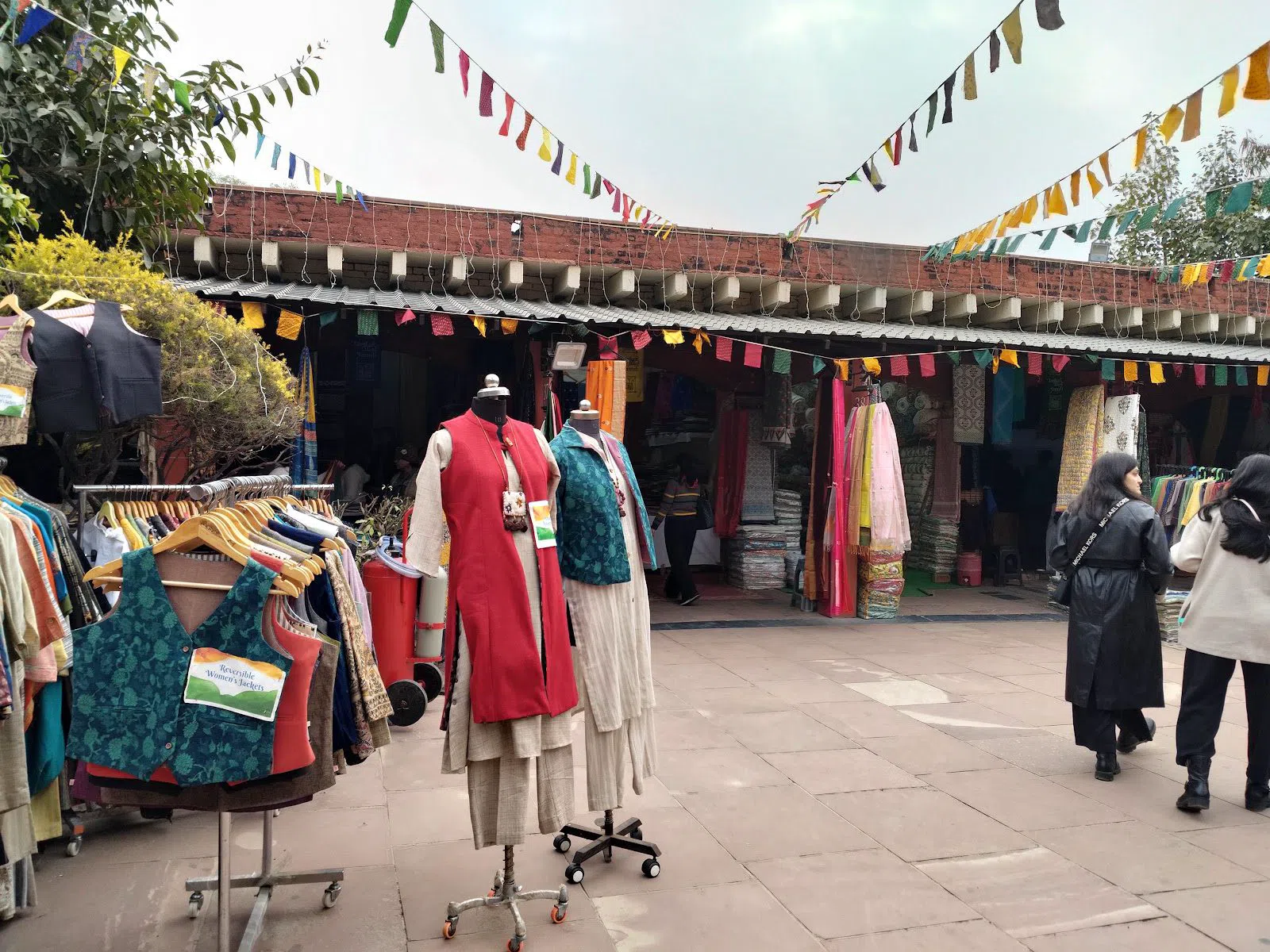
Entry to Dilli Haat INA costs ₹30 for an Indian adult and ₹100 for a foreign national, paid at the gate on Sri Aurobindo Marg. DTTDC lists the hours as 11 a.m. to 8 p.m., though the stalls and the food plaza generally run later into the evening. Inside, stone paving runs between six acres of thatched brick-and-mud kiosks.
Inside Dilli Haat
Handicrafts from every Indian state sit here in one walkable market, which is true nowhere else in the city. The kiosks stand state by state under tiled canopies, strings of bunting cross overhead, and an open-air amphitheatre holds the centre of the plaza. A boundary wall separates the paving from the Sri Aurobindo Marg traffic.
Tickets are sold per head at the Aurobindo Marg gate. School parties and tour groups come through all day and there is no door policy, so you can turn up with 12 people and warn nobody in advance.
The market reopened in May 2025 after an April 2025 fire destroyed around 30 stalls. National craft events have run on the site since, including the PM Vishwakarma Haat in January 2026. Give the plaza the end of the afternoon and the start of the evening: the craft stalls and the food plaza are the part of this area that stays open after the monuments shut.
Delhi Tourism Travel Bureau (beside the Dilli Haat ticket window) is easy to walk straight past. The DTTDC counter faces Sri Aurobindo Marg under a Delhi Tourism signboard, a single room with printed tour boards and a desk, and it sells official Delhi and Agra day tours at state rates. That is the cheapest legitimate way to book a guided trip without going through a hotel desk. Coach tours and multi-person itineraries are its main business, so a family of six and a party of 30 get the same counter.
Plan your Delhi trip
Live prices from our booking partners.
Free cancellation on many rooms. We may earn a commission when you book.
Eating in the food plaza
Stall 11 is the Sikkim Tourism Tashi Delek Food Stall, a bamboo-and-thatch frontage with a Sikkim Tourism board above it and aluminium steamer baskets stacked at the counter. Pork, chicken and vegetable momos cost ₹120 to ₹150 a plate and arrive with a clear stew. Two people eat for ₹500. You order over the counter, nothing is booked, and you sit on plastic stools at low tables on the stone paving. The state-government stalls on either side do the same job in Rajasthani, Awadhi and north-eastern cooking.

Navdanya Organic Food Cafe (Shop 18, Dilli Haat food court) is the most interesting meal on the site for a visitor. Vandana Shiva's Navdanya network cooks regional vegetarian food from its own organic farmers, and the same heirloom grains, millets and spices are sold from labelled glass jars behind the counter. Millet thalis come out on steel plates to plain outdoor tables under the thatch. Two eat for ₹500, the kitchen runs 10 a.m. to 10 p.m., and there are no reservations. ₹₹.
Safdarjung's Tomb and Lodhi Garden
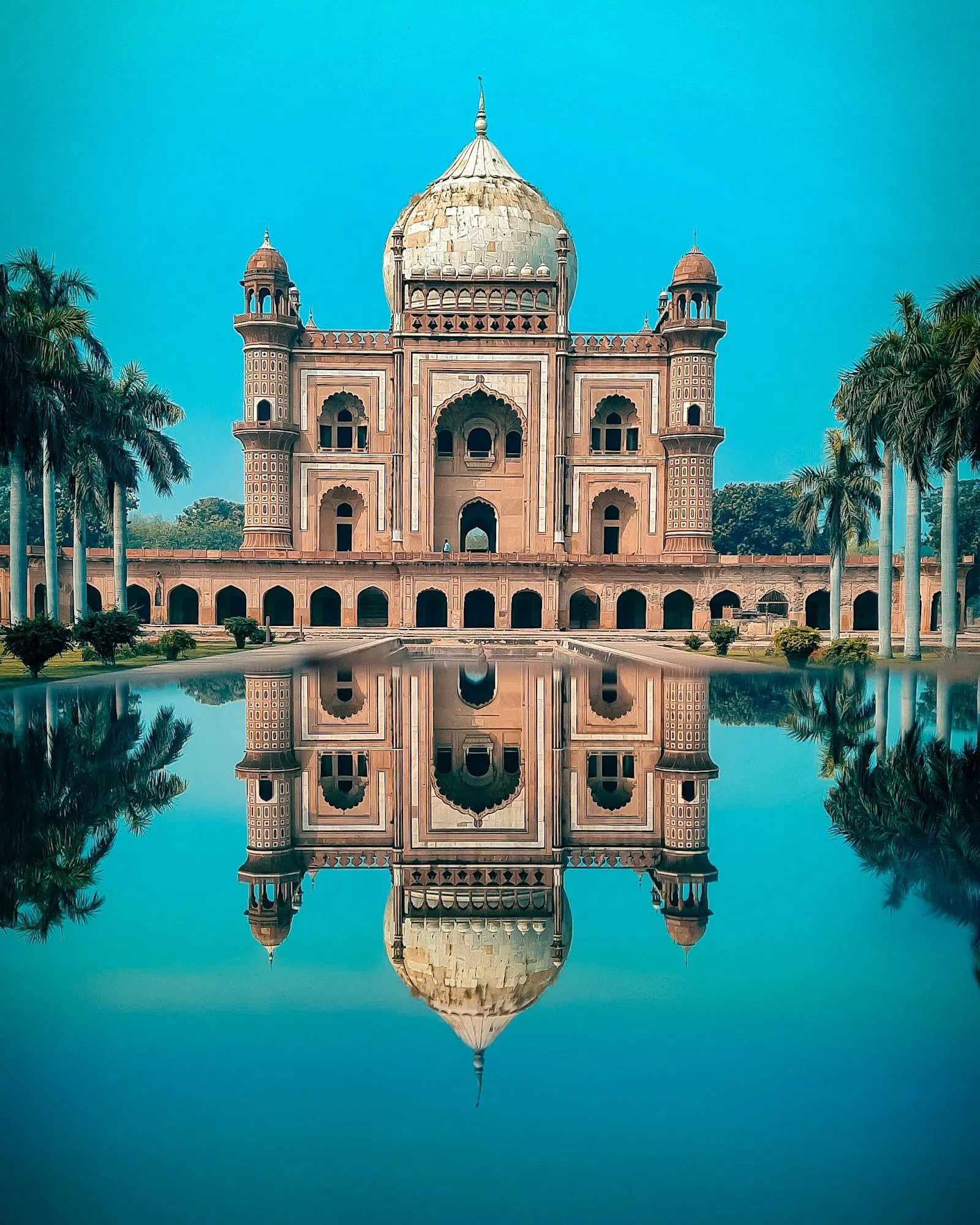
Safdarjung's Tomb stands 1.5 km north up Aurobindo Marg and is the nearest true monument to the haat. Built in 1754, it is the last great Mughal garden tomb and far emptier than Humayun's. Buff-and-red sandstone carries a high arcaded plinth, a bulbous marble dome and four corner towers, set in a walled charbagh of lawns and empty stone water channels, with a tall arched gateway and a pavilion over it. Tickets are ₹25 for Indians and ₹300 for foreigners, sold in separate lines, and the grounds open from sunrise to 5 p.m. daily. Go in the morning; the ASI gates here close well before the market does.
Lodhi Garden (2.5 km northeast) is the best free walk in the area. Sayyid and Lodi dynasty tombs stand loose in the grass of a working city park across 90 acres of clipped lawns and old trees: Bara Gumbad's domed cube with its mosque, Sheesh Gumbad with patches of blue glazed tile surviving in the facade, and the eight-pier Athpula bridge over a pond. Joggers loop the paths from 6 a.m. to 8 p.m. No gate controls the park and photography carries no charge, so you can take it at either end of the day.

Moth ki Masjid behind South Extension II
Moth ki Masjid is buried in the lanes behind South Extension II, roughly 3 km east, and you reach it on foot through residential back streets with nothing signposting the turn. The 1505 Lentil Mosque puts five arches across a prayer facade of red sandstone and incised plaster under a broad semi-circular dome, with octagonal double-storey corner towers, latticework stone screens, and a huge neem tree shading the walled courtyard. Entry is free, the hours are sunrise to sunset, and the maintenance is visibly poor.
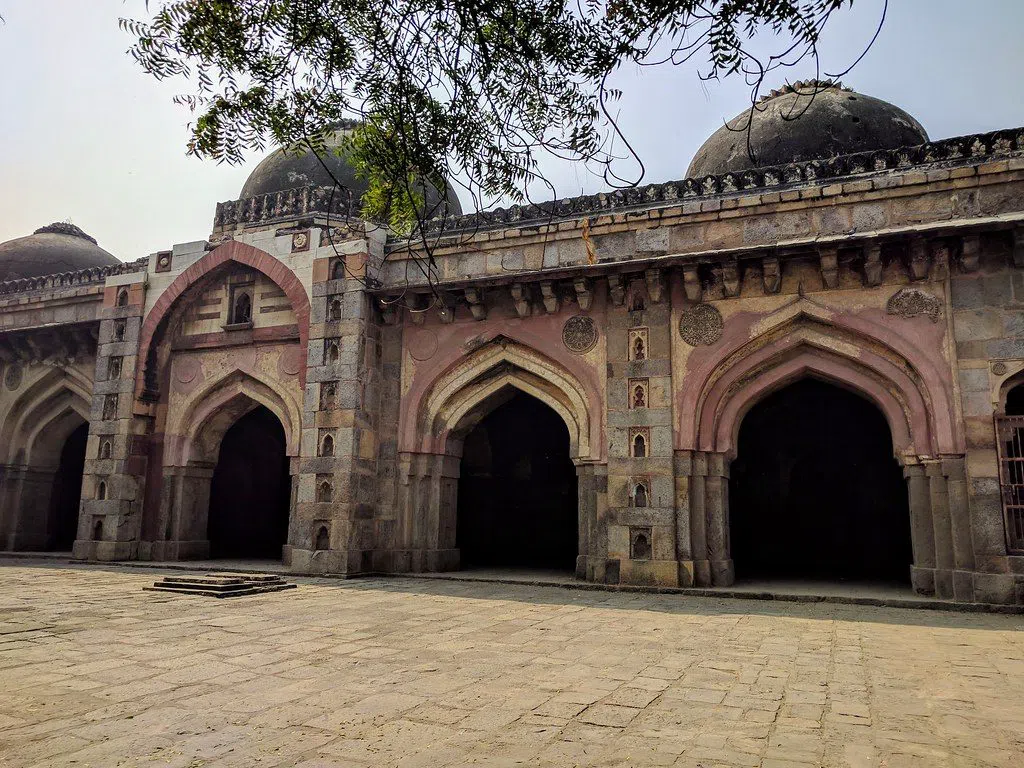
It is still a working mosque and almost always empty. Come in a small group, cover up, and stay away at prayer times.
Murals between Lodhi Colony and Meharchand Market
Lodhi Art District, 2.5 km east, was India's first public art district and costs nothing to see. Pastel-washed 1940s Lutyens-era barrack housing runs in blocks with arched colonnade walkways, and each end wall carries a full-height mural, washing lines and scooters parked in front. The grid of quiet residential streets runs from Third to Fifth Avenue. Walking it between Lodhi Colony Market and Meharchand Market takes 30 to 45 minutes. The February 2026 Lodhi Art Festival marked the district's tenth year and added six new murals, so the walls are not the ones in older photographs. People live behind those walls, so keep clear of the doorways and of the colonnades people are using.
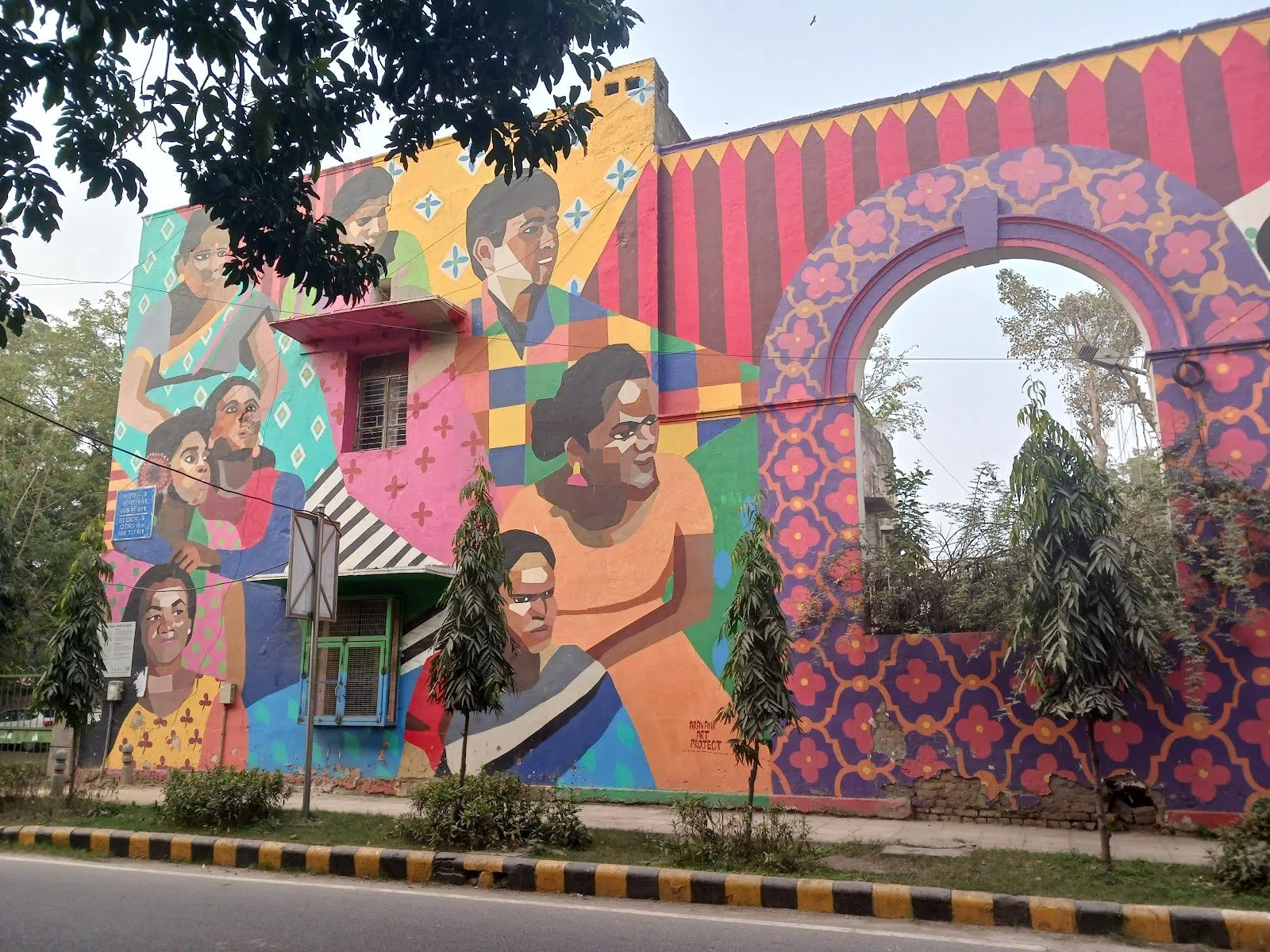
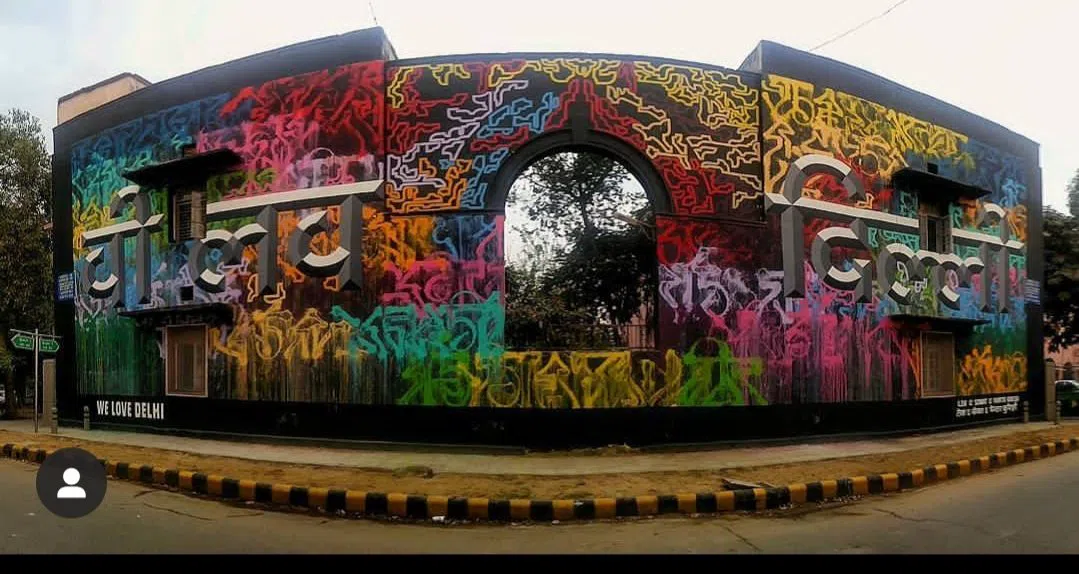
Meharchand Market faces the pastel Lodhi Colony blocks and ends that walk naturally. A single row of low colonnaded shopfronts holds Indian designer boutiques behind glass, Blue Tokai Coffee Roasters at shop 115, and Elma's and Chez Nini for a sit-down break under the awnings. Cars nose-park along the kerb and the murals show at the street corners. The cafés themselves are small rooms. ₹₹.
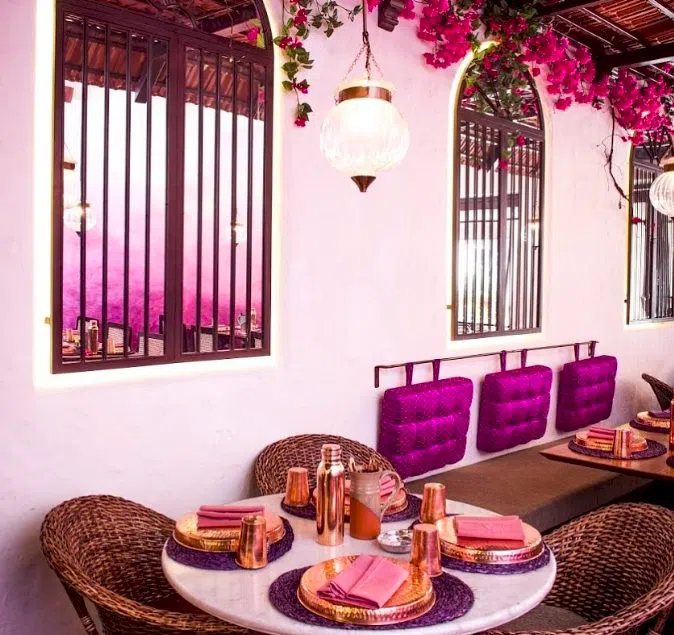
Jamun (17 Lodhi Colony Market) is the air-conditioned, bookable version of what the Dilli Haat food stalls do, cooking regional Indian food from across the country. The corner unit sits in the market's arched colonnade, pastel and terrazzo inside, cane chairs and botanical prints, dishes served in brass and copper vessels. It opens at 12.15 p.m., trades late, and was still trading through 2026. Reservations are taken and the room seats proper group tables, so it is the one sit-down address here for a party of eight. ₹₹₹.
Sarojini Nagar Market

Sarojini Nagar Market lies a kilometre west of the haat and sells export-surplus clothing at ₹100 to ₹800 a garment. Tight pedestrian lanes run between low shopfronts, garments stacked waist-high on blue tarpaulins and hung on frames overhead, prices written by hand on cards. Crowds push through thickest at dusk, and a large party should split into pairs and agree where to meet.
The market trades Tuesday to Sunday, 10 a.m. to 9 p.m., and closes on Mondays. NDMC has announced a Phase-I redevelopment of the site. The shopkeepers' association said through 2026 that the market remains open and trading, so a redevelopment headline is not a reason to drop it from the day.
Evergreen Sweet House and Rajinder Da Dhaba
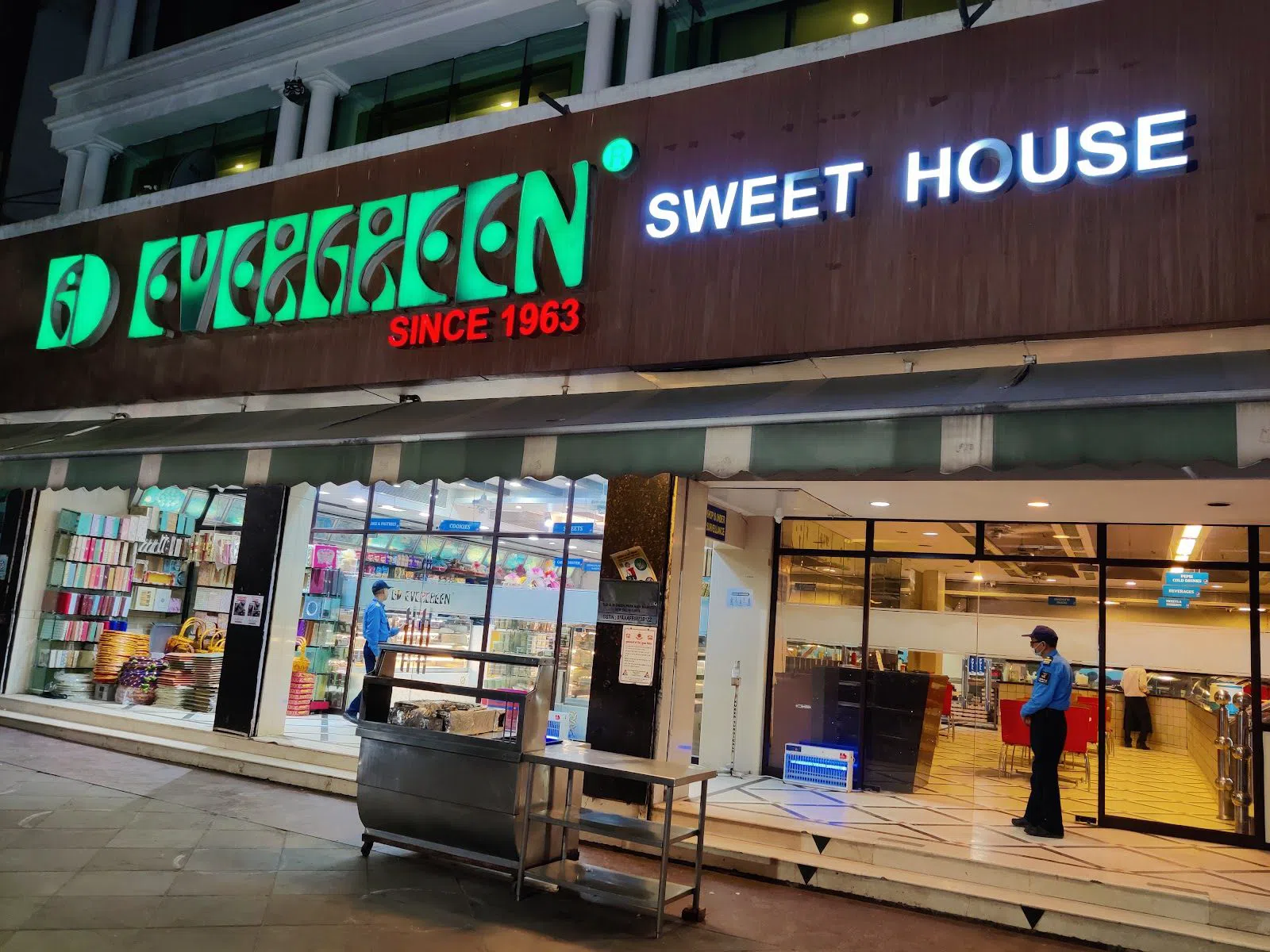
Evergreen Sweet House (Green Park Main Market) is 2 km south and four decades old. Long glass counters carry steel trays of barfi, laddoo and silver-leafed sweets to take away, and a busy stand-up snack hall sits behind them for chaat, dosas and chole bhature. It opens 9.15 a.m. to 9.45 p.m. daily, walk-in only, and the hall swallows a large group without anyone planning for it. This is the most reliable cheap vegetarian feed near Dilli Haat. ₹.
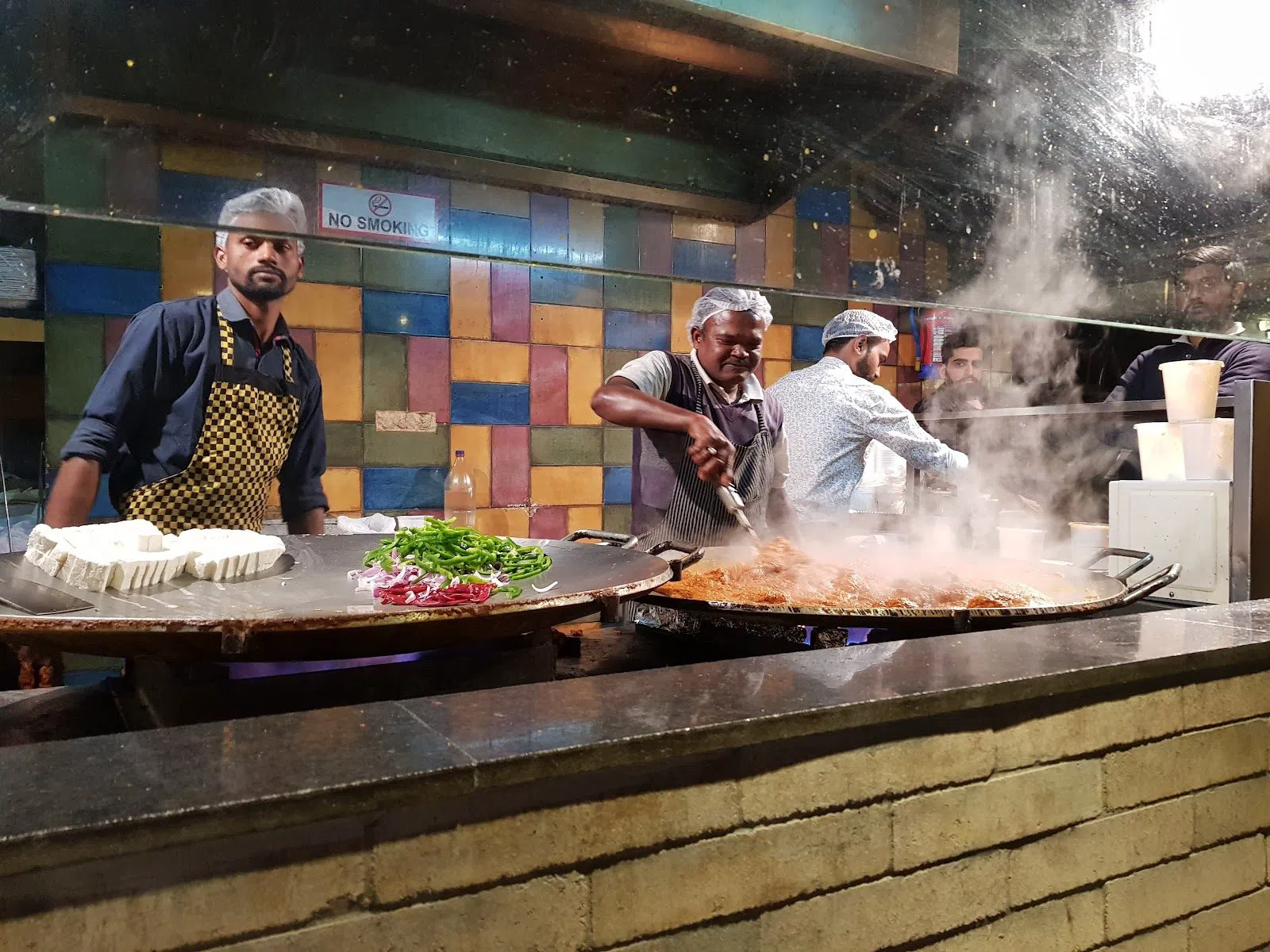
Rajinder Da Dhaba (Safdarjung Enclave Market) grills galouti and seekh kebabs 2.5 km southwest, and it opens only from 3 p.m. to 11.30 p.m. The charcoal tandoor smokes right at the pavement front, skewers come off it wrapped in foil, customers scrum at the counter, and cars double-park across the DDA market. Seating is cramped and the grill is the whole point. The kitchen is strictly non-vegetarian, so who you are feeding decides whether it belongs in your evening at all. ₹₹.
Live music at Humayunpur
The Piano Man Jazz Club (B6 Humayunpur, Safdarjung Enclave) is the area's one real night out, 2.5 km southwest. Jazz, blues and rock play live most nights in a low, dim, red-lit room of exposed brick, a grand piano on a shallow corner stage and tiered bar seating facing it. The entrance is off the tangled Humayunpur lanes opposite Deer Park and takes some finding on a first visit.

Gigs are ticketed and the calendar runs through November 2026. Book online in advance. The room is small, so a large group rarely ends up seated together. It sits on the 30 Best Bars India list. ₹₹₹.
Where to stay
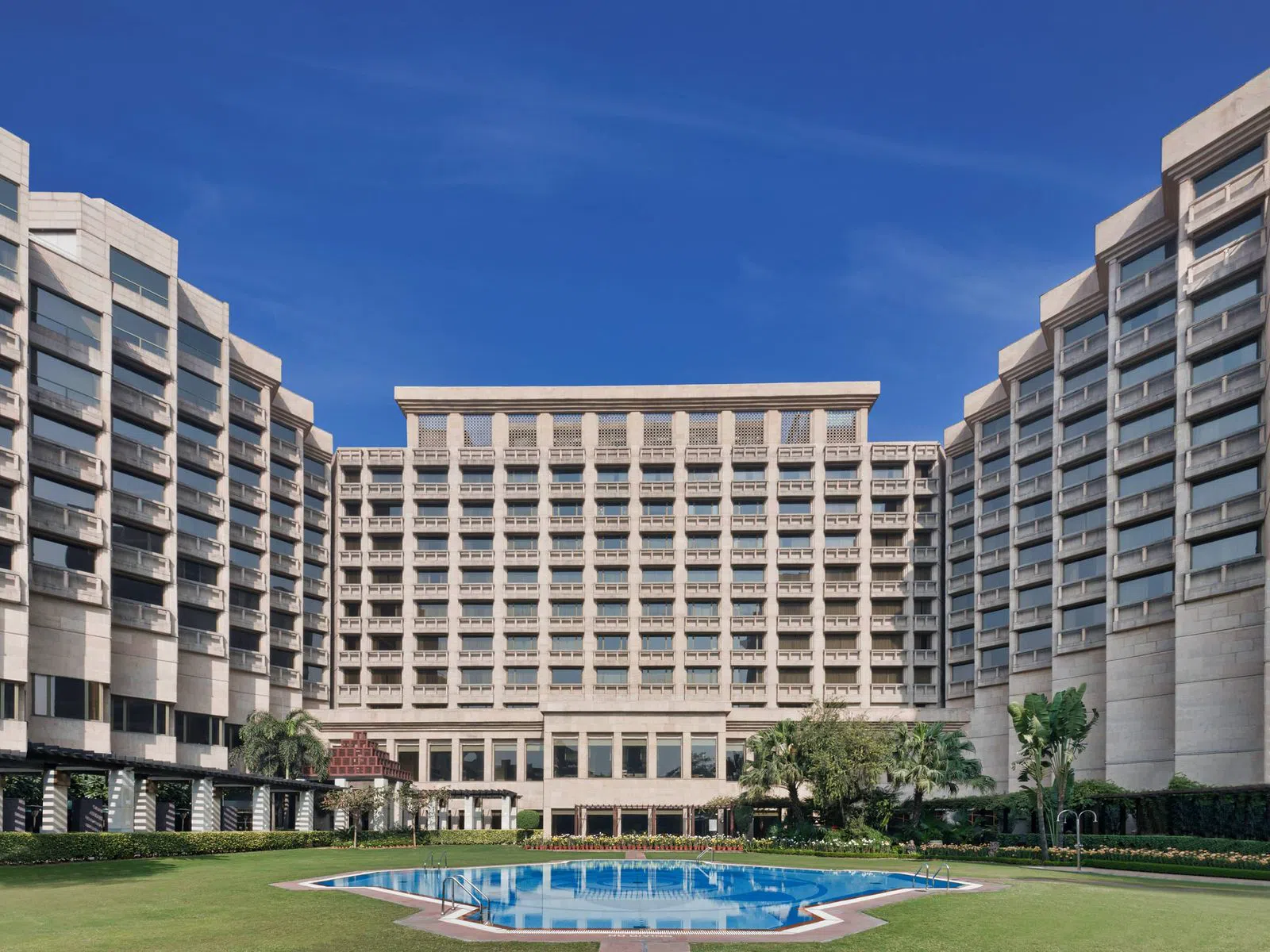
Hyatt Regency Delhi (Bhikaiji Cama Place) is the closest full-service international hotel, 2.3 km west of Dilli Haat. The long sandstone-clad block sits back from Ring Road, with a tall plant-filled atrium lobby and an outdoor pool ringed by palms and lawn. It opened in 1983 and was last refurbished in 2024. The China Kitchen, one of Delhi's best-regarded Chinese restaurants, is inside, and the banqueting and conference floors handle large events. ₹₹₹.
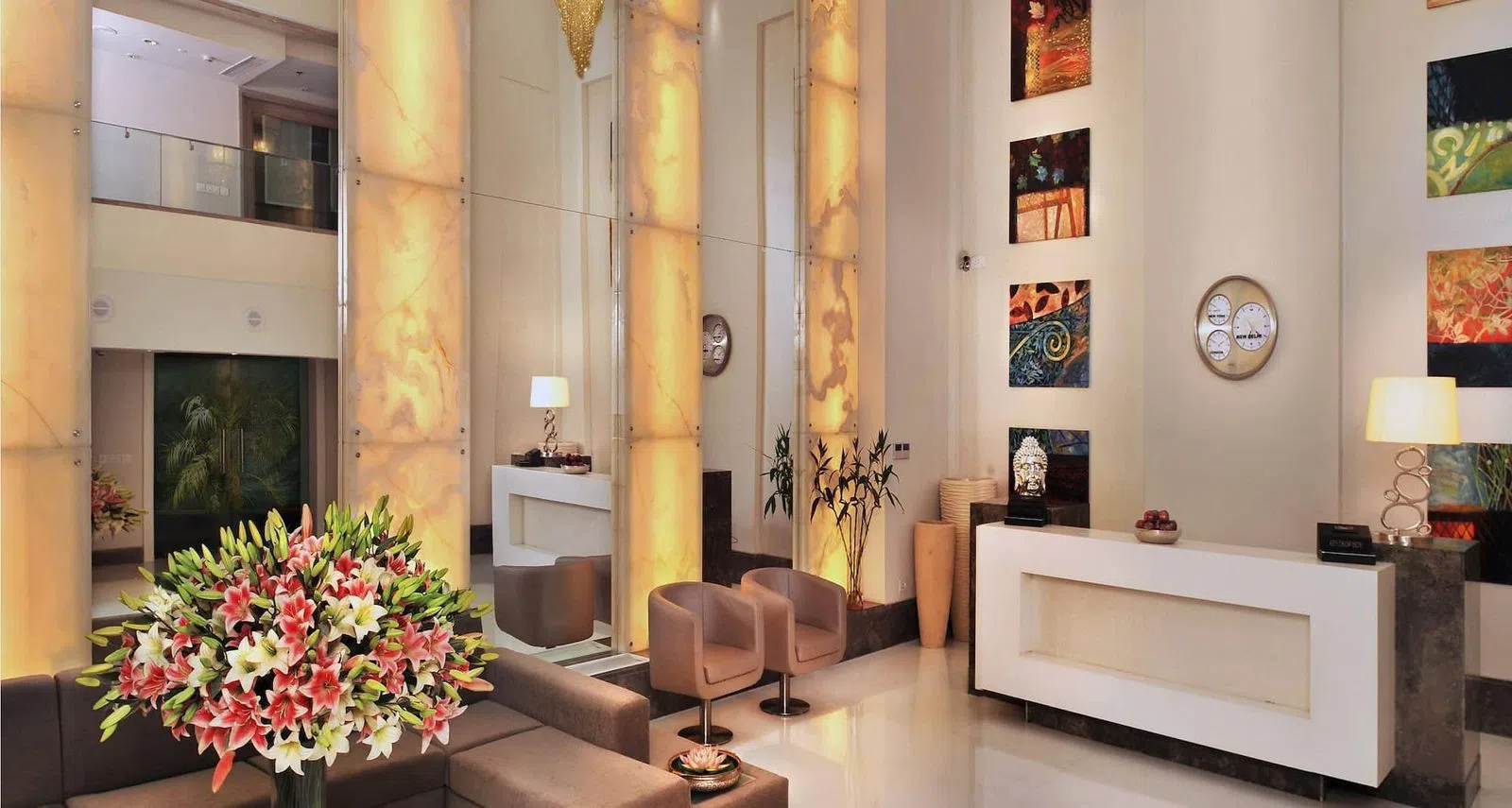
The Ashtan Sarovar Portico (C-2 Green Park Extension Road) is the practical mid-price base, 2 km south, at ₹5,800 a night. The frontage is compact glass and render with a porte-cochère on a narrow street, a rooftop terrace above the residential block line. Green Park metro exit 3 is a short walk away and Dilli Haat is two Yellow Line stops from there. Group bookings and small conferences are taken, and kerbside coach access is limited. ₹₹.
For other addresses in this part of the city, start with the Delhi hotel search.
Days, hours and bookings
Sarojini Nagar Market shuts on Mondays, Rajinder Da Dhaba opens only in the afternoon, and the ASI and park gates close earlier than the haat. Reserve a table at Jamun and buy Piano Man tickets before you arrive.
See the Delhi guide for the rest of the city.
Before you go
How much is entry to Dilli Haat INA, and when is it open?
You pay per head at the Aurobindo Marg gate: ₹30 for an Indian adult, ₹100 for a foreign national. DTTDC gives the hours as 11 a.m. to 8 p.m., though the stalls and the food plaza usually run later into the evening.
Is Dilli Haat INA still open after the fire?
Yes. A fire in April 2025 destroyed around 30 stalls and the market reopened in May 2025. National craft events have run there since, including the PM Vishwakarma Haat in January 2026.
What is worth eating inside Dilli Haat?
Stall 11, the Sikkim Tourism Tashi Delek Food Stall, serves pork, chicken and vegetable momos with a clear stew at ₹120 to ₹150 a plate, about ₹500 for two. You order at the counter and there are no bookings. Navdanya Organic Food Cafe at Shop 18 cooks regional vegetarian food from its own organic farmers, also ₹500 for two, and opens 10 a.m. to 10 p.m.
Which day should I avoid for shopping at Sarojini Nagar Market?
Mondays. It trades Tuesday to Sunday, 10 a.m. to 9 p.m., and sells export-surplus clothing at ₹100 to ₹800 a garment. The lanes are tightest at dusk, so split a large group into pairs.
Where can I stay within walking or metro distance of Dilli Haat?
The Ashtan Sarovar Portico on Green Park Extension Road costs ₹5,800 a night. It is a short walk from Green Park metro exit 3 and two Yellow Line stops from Dilli Haat. The closest full-service international hotel is the Hyatt Regency Delhi at Bhikaiji Cama Place, 2.3 km west.