The Delhi issue
Crossing Delhi Without Getting Lost or Overcharged
The fixed-price ways to move around Delhi: metro, airport rail, prepaid taxis and the apps that set the fare before the driver arrives.

By Bram VerhoevenA Dutchman reading Delhi one neighbourhood at a time
Delhi is not a hard city to cross. It is a city where the price of crossing it is negotiable, and that is an entirely different problem. The metro map is legible, the fares are printed by distance and the trains arrive to the minute. Then you come up the stairs into a street where a helpful stranger explains that your hotel has closed, the ticket office is shut for a holiday, and his cousin happens to have a car outside. Learn which parts of the system carry a fixed price and which parts open with a suggestion, and the city flattens out inside a day.
The metro carries most of your week
Delhi Metro (DMRC) reaches almost everywhere a first-time visitor actually wants to be, and it is the single most reliable, unrippable way to move here. Fares run ₹10 to ₹60 and are set by distance, so there is nothing to argue about, no meter to inspect and no sudden discovery that the price was per person. Buy QR tickets in the Momentum 2.0 app (listed as Delhi Sarthi), where one phone can buy for everyone, which is far quicker than four people queuing separately at a token window. If you are riding hard for a day or three, the Tourist Card costs ₹150 for one day or ₹500 for three, each including a ₹50 refundable deposit you claim back at a customer care window before you leave.
Two things catch people out. The first is luggage: the limit is one bag of 80×50×30cm and 25kg per person, so stepping off a long-haul flight with two large suitcases and heading for the ordinary metro is the wrong first move. The second is the front coach, which is reserved for women; men who wander in absent-mindedly pay a ₹250 fine, and the fine is real rather than theoretical. Every entrance has a CISF bag scanner, so keep a group together through security rather than filtering through in ones and twos and losing each other on the far side.
Avoid 8am to 11am and 5pm to 9pm if you can. Shoulder-to-shoulder is not an exaggeration on the Blue and Yellow lines at those hours, and with a backpack on you will be the least popular person in the carriage. Because so much of a Delhi week resolves to metro time, being within a few hundred metres of a station is worth more than any particular address, so filter for it when you run a Delhi hotel search.
Plan your Delhi trip
Live prices from our booking partners.
Free cancellation on many rooms. We may earn a commission when you book.
Coming in from the airport without an argument
The Airport Express Line (Orange Line) links New Delhi Railway Station to Terminal 3 for ₹60, at 120km/h, in about twenty minutes, a timing no taxi can promise at any hour of any day. Short hops start at ₹10. There is far more luggage room than on the ordinary metro and no restriction on group size, and if you are flying out, the check-in counters at New Delhi and Shivaji Stadium let you drop bags in the city and travel to the terminal unencumbered. The Delhi Metro Tourist Card is not valid on this line, so buy a separate ticket and do not stand at the gate insisting otherwise.
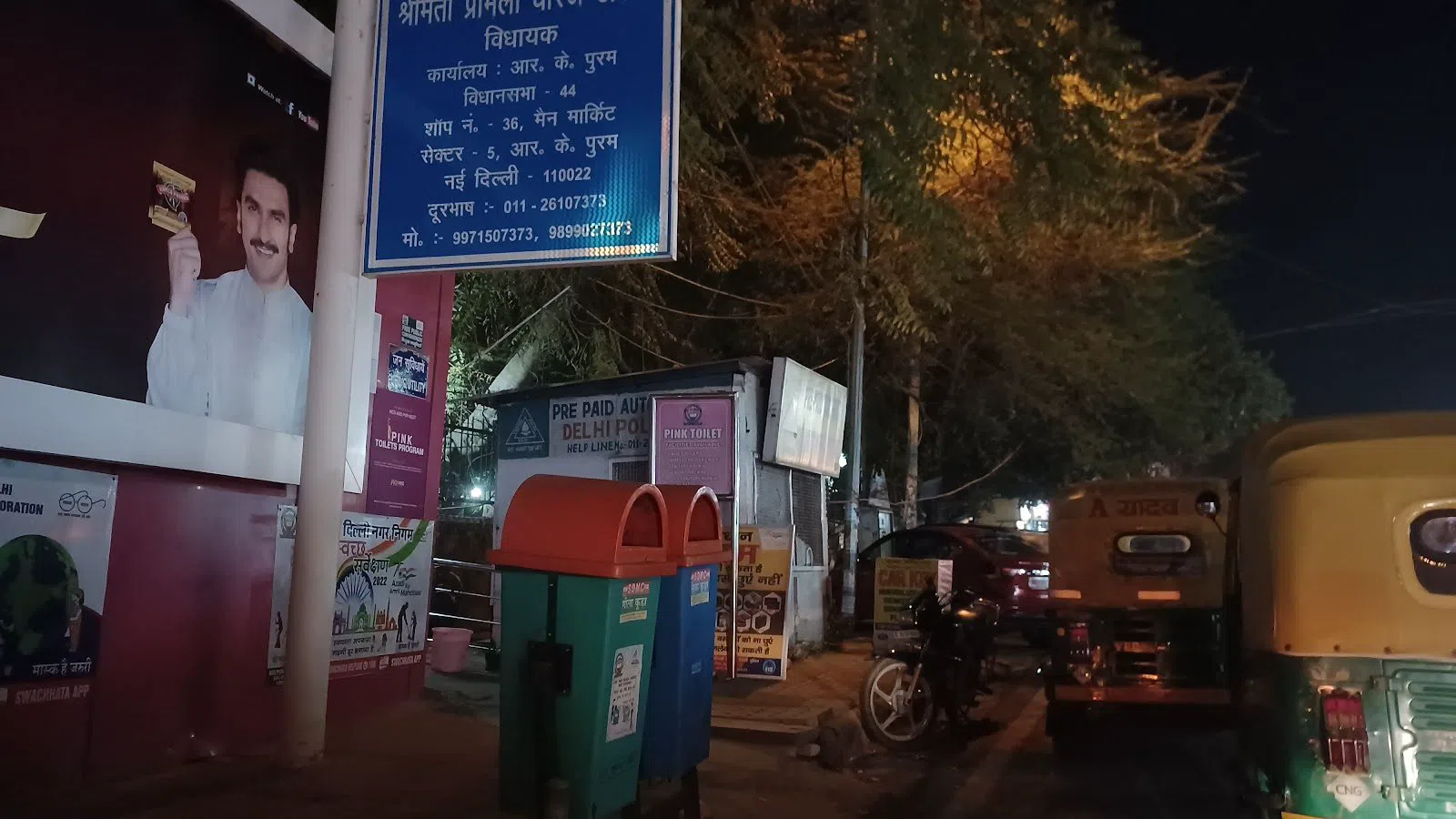
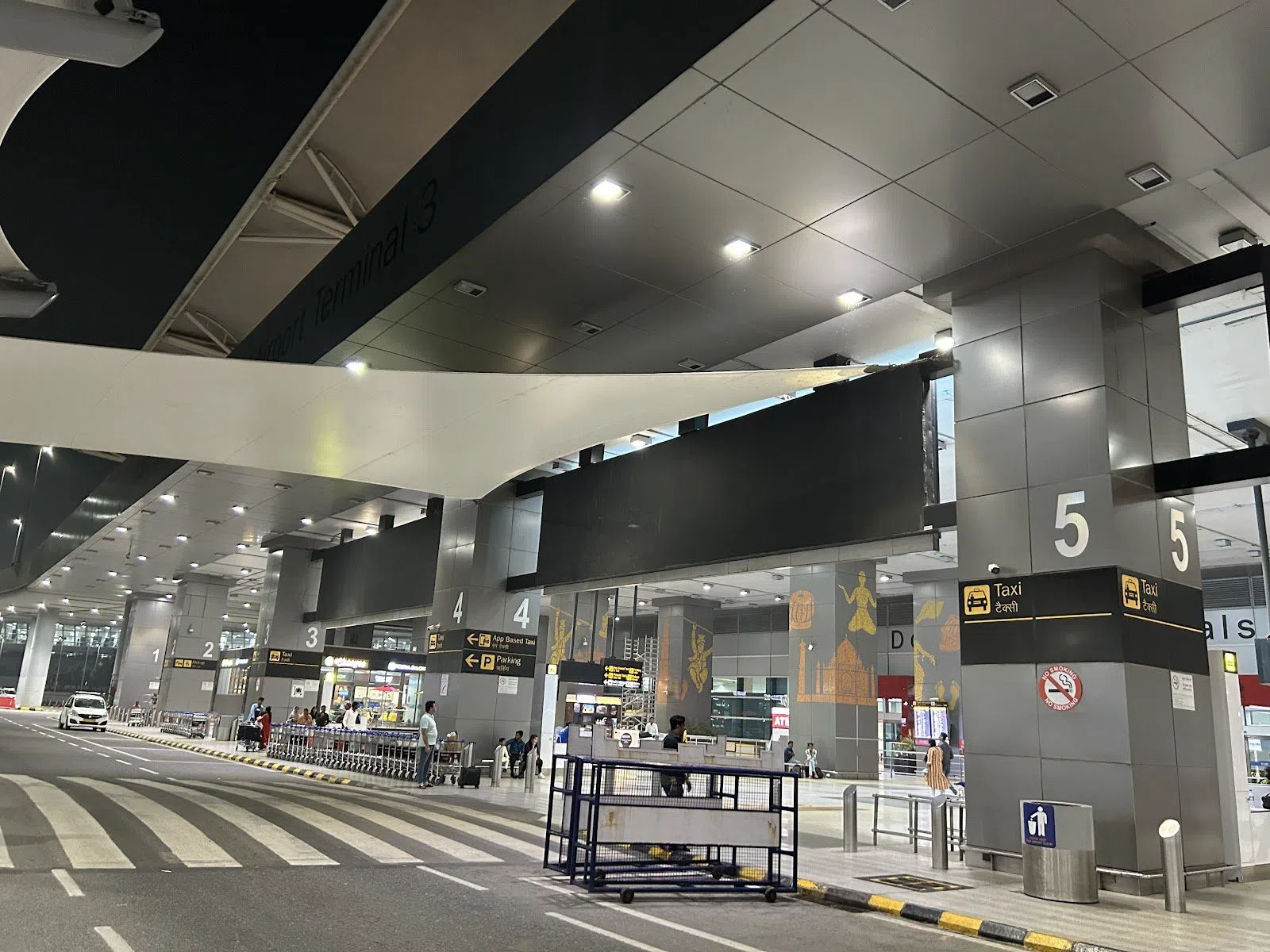
If you would rather have a car, the Delhi Police Prepaid Taxi Booths inside the arrivals concourses at Terminals 1 and 3 remain the plainest defence a new arrival has. You pay at the counter against a published chart (roughly ₹500 to ₹800 from Terminal 3 to Connaught Place, depending on the night surcharge) and walk away with a receipt recording the vehicle number, destination and fare. That piece of paper is the entire answer to a renegotiation halfway down the motorway. There is a second booth on the Ajmeri Gate side of New Delhi Railway Station, useful in the other direction. Ignore any other desk in the hall describing itself as prepaid, official or government-approved. The police counters are the ones inside the concourse, and there is no group limit: you queue once and are assigned a car per party.
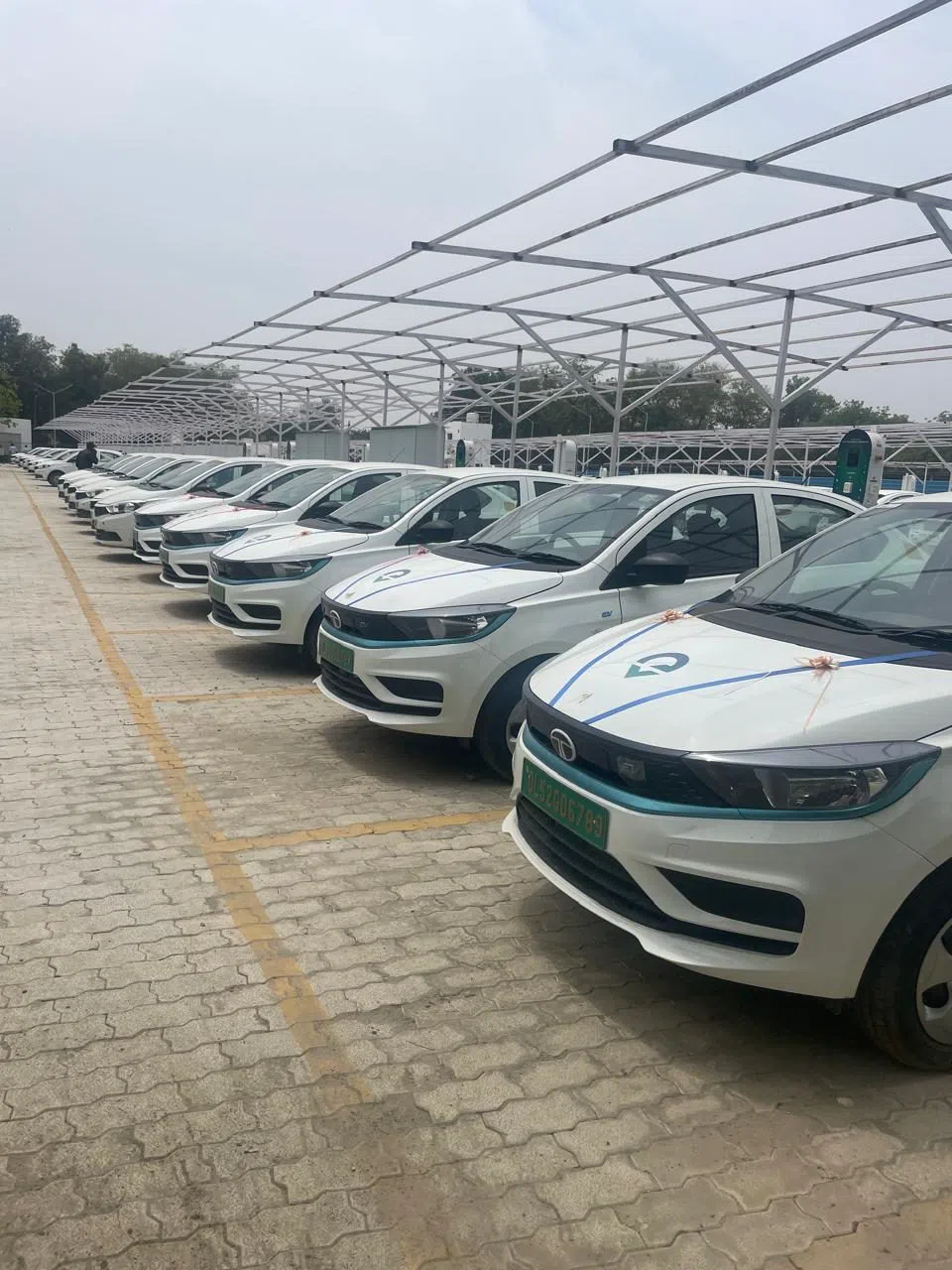
Evera Cabs runs an all-electric Delhi-NCR fleet built around assured airport transfers, and its value is in the guarantees. Drivers cannot cancel your booking, and the price does not move with demand or traffic. A transfer into central Delhi sits around ₹600 to ₹1,200, fixed at the moment you book, which makes it the sane counterweight to a 2am surge on the apps. The operator absorbed several hundred vehicles from the collapsed BluSmart fleet in 2025, so supply is better than it once was. It suits families and small groups; over four people with luggage, book two cars rather than hoping for a van.
Uber works well from Terminal 3 at roughly ₹350 and up, with typical cross-city runs between ₹200 and ₹600, and the fare is agreed in the app before you get in, which removes the argument at the end of the ride. Airport pickup is not kerbside: you walk to the ground floor of the T3 car park opposite arrivals gates 1 and 2, so allow ten minutes for the hike with bags. UberXL exists but supply is thin, and two ordinary cars is faster than waiting for one large one.
Domestic connections catch people badly, because Terminal 1 and Terminal 3 are a genuine 20 to 25 minute drive apart. The Delhi Airport Inter-Terminal Shuttle (DIAL) runs every twenty minutes, takes whole groups with luggage, and is free with a connecting boarding pass, ₹25 otherwise. Collect the coupon at the kiosk rather than paying a taxi for a journey you are already entitled to: Pillar 10 at T3, Lane 1 arrivals at T1, near VIP parking at T2.
The apps that end the fare conversation
Install two ride-hailing apps, not one. Ola covers the same ground as its rival at ₹150 to ₹600 for most city journeys, but supply and surge move differently, and on a wet evening the app that finds you a car in four minutes rather than twenty is the one that matters. There is no door policy to speak of on either; a group of six simply books two or three cars and meets at the other end.
Rapido solves the auto-rickshaw problem, the broken meter and the fare that doubles when you mention a hotel, by setting the price before the driver arrives. Most auto trips land between ₹40 and ₹200, insurance is included on every ride, and there is nothing left for the driver to open with. Autos seat three at a squeeze, so a party of six books two. Bike-taxi service in Delhi has been legally contested for years and its availability comes and goes; treat the auto and cab options as the dependable ones and do not build a plan around a pillion seat.
Between the station and the front door
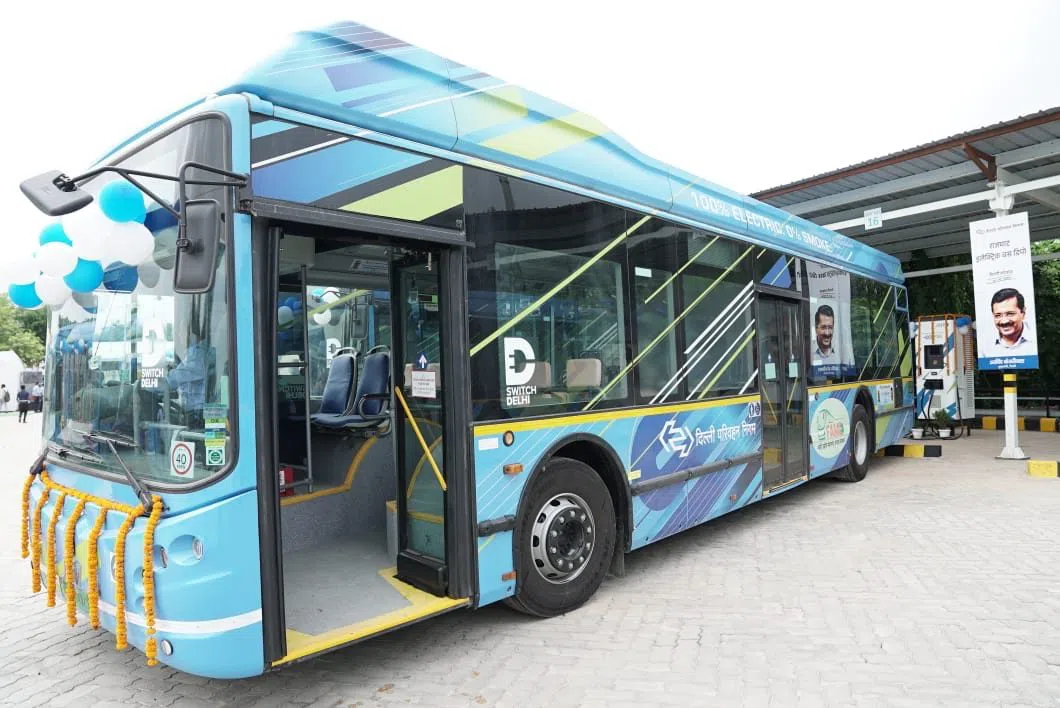
The last kilometre is where Delhi gets expensive out of all proportion, because a two-minute cab ride still costs a full pickup fee. DTC and DEVI Electric Buses are the honest answer: fares run ₹10 to ₹25 by distance with 10% off when booked through the One Delhi app, and travel is free for women. Around 400 DEVI minibuses now work 47 routes into lanes the full-size fleet cannot physically enter, which is precisely the gap between a metro exit and a guesthouse. Track them live in the app rather than standing hopefully at a stop, and buy in advance so nobody is fumbling for change at the door. Boarding a group is fine outside peak hours; at peak it is not worth attempting.
Yulu shared e-bikes fill the same gap on two wheels, at about ₹2.5 per minute plus a ₹250 refundable deposit. They are speed-capped at 25km/h and need no driving licence, and the zones around central metro stations usually hold enough machines. One rider per vehicle, so a group takes one each. The return is what trips people up: you must leave the bike in a marked Yulu Zone, so find the nearest one on the map before you set off rather than after you arrive.
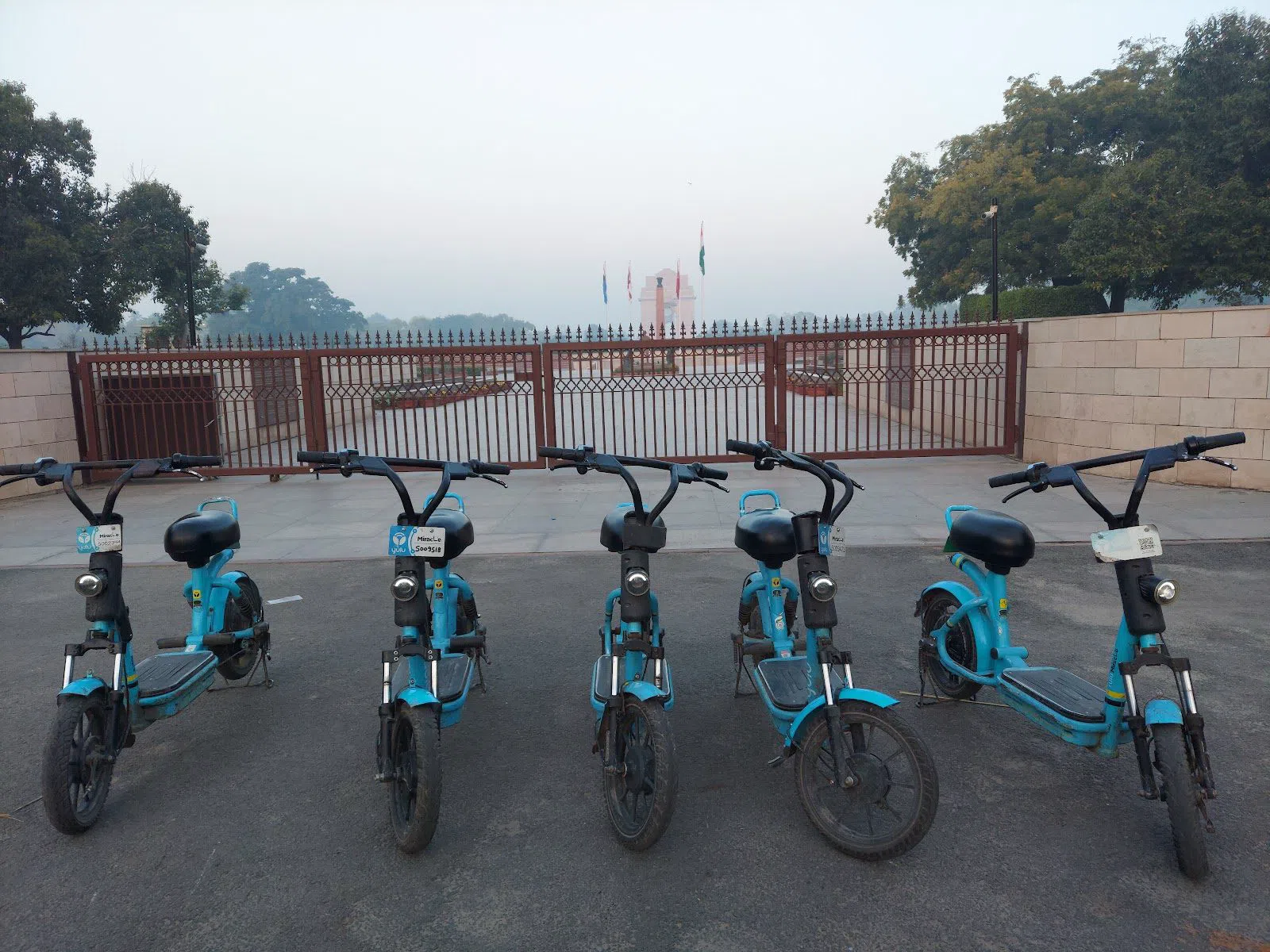
A first day that requires no negotiation at all
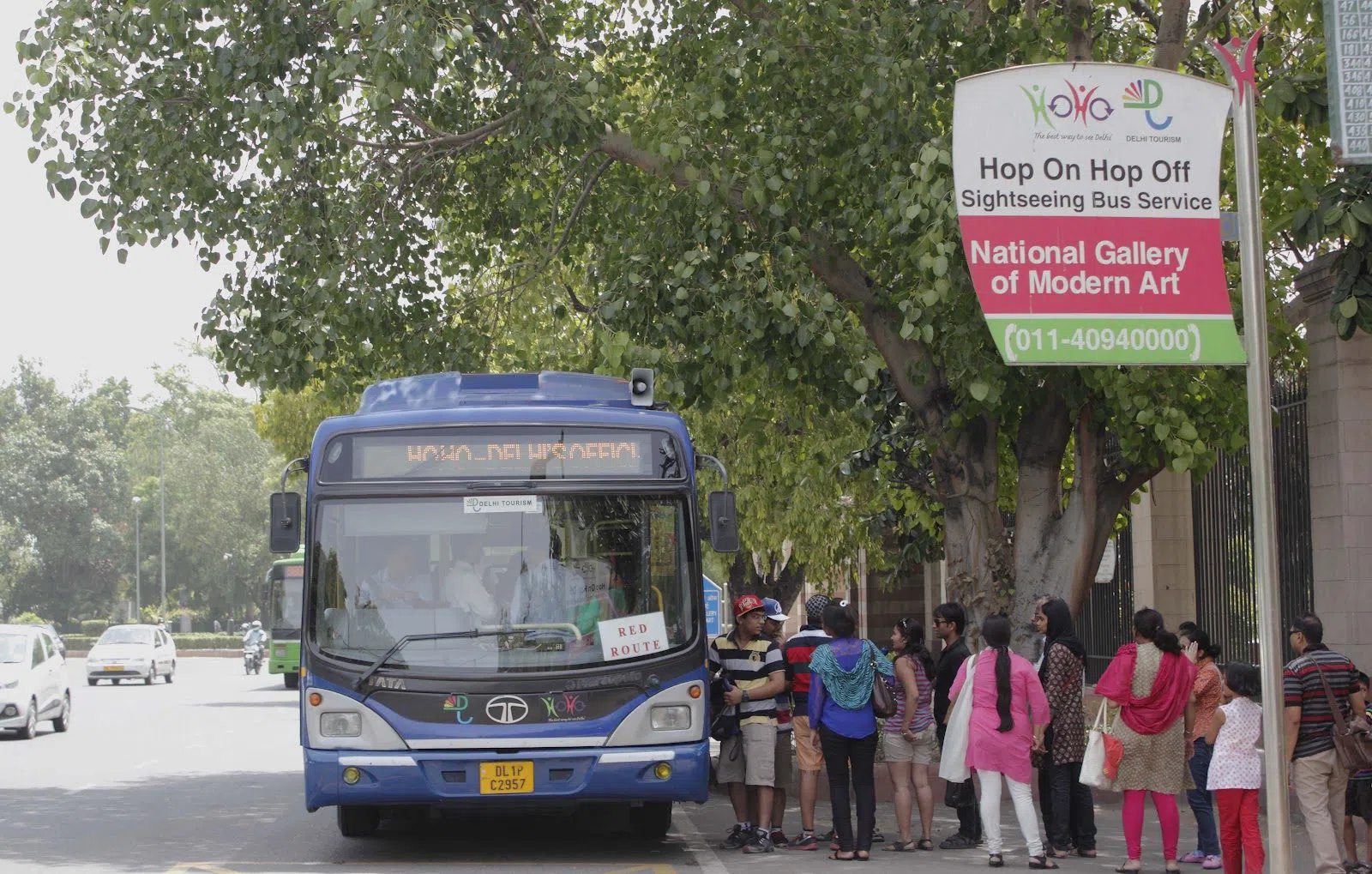
If you would rather not decode any of this on day one, HOHO Delhi (Delhi Tourism's own hop-on hop-off service, running since 2010) is a fair-value shortcut at around ₹634 per person for a day pass. It covers sixteen-plus sites including Qutub Minar, Red Fort and Humayun's Tomb, with commentary in English and Hindi, and there are four pickup points across South Delhi, West Delhi, the airport and the centre, with staggered departures from 7:25am. It is built for groups, and a fixed price beats a day-hire driver who quietly steers the itinerary into three emporiums and a carpet showroom.
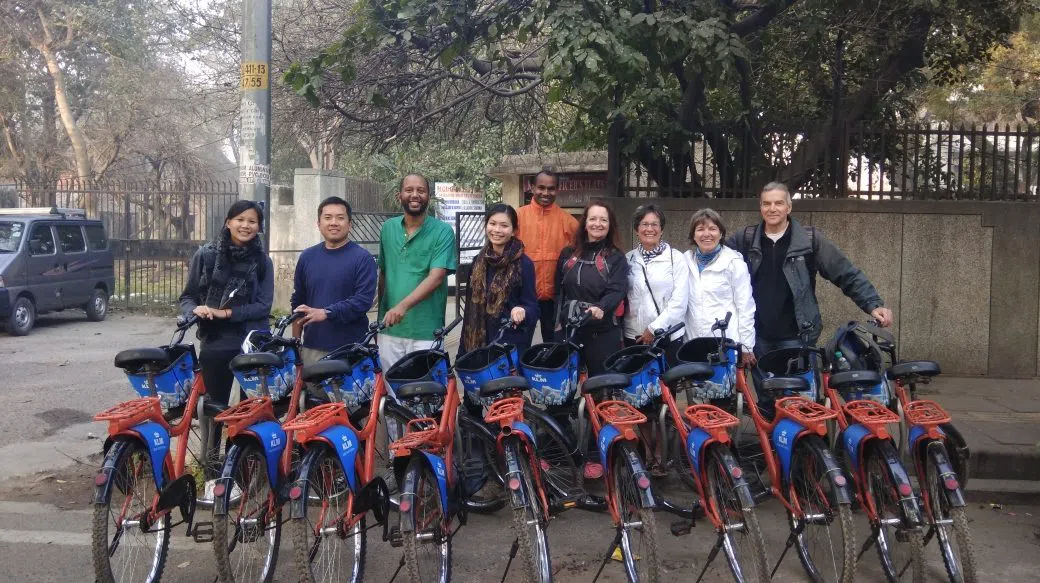
For Old Delhi specifically, the lanes are a different proposition on a bicycle at dawn than on foot at noon. DelhiByCycle runs four fixed routes (Shah Jahan, Yamuna, Raj and Nizamuddin) early enough that the lanes are still empty, which is realistically the only window in which a first-timer should cycle here. Tours cost roughly ₹2,500 to ₹3,500 per person including breakfast and chai, and are capped at eight riders, so a larger party books consecutive slots rather than one big group. That cap keeps the guiding conversational instead of turning it into a convoy.
Getting out again
Train tickets are where the touting is most organised. The International Tourist Bureau upstairs at New Delhi Railway Station is the official foreign-tourist-quota counter, it charges ticket cost only with no booking premium, and it takes rupees or foreign currency. It is badly signposted, which is exactly why men at the entrance will tell you it is shut for a holiday, closed for lunch or under renovation, and offer to walk you to a government agent. It opens every day of the year. Walk past them, climb the stairs, and bring every passport in the party, since one counter handles multi-passenger bookings.
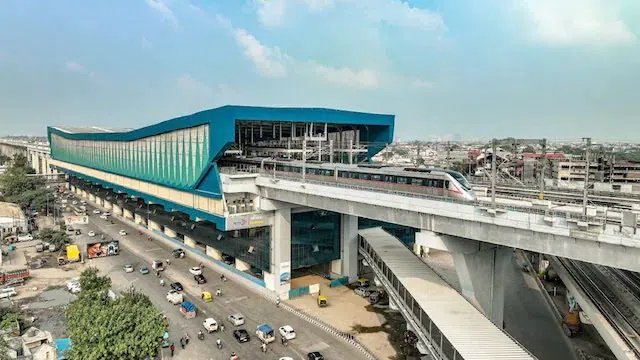
Namo Bharat, the regional express service from Sarai Kale Khan, is the fastest clean exit from Delhi's eastern sprawl. The full 82km corridor opened on 22 February 2026 and now carries 100,000 riders a day at 160km/h, turning a grinding road journey into under an hour. Fares start at ₹20 for short hops and reach about ₹213 end to end; the premium coach costs 20% more but there is only one per train with limited seats, so a group of any size should stay in the unreserved standard coaches.
For the hills, Maharana Pratap ISBT at Kashmere Gate is Delhi's oldest and largest terminus, with 45 departure bays, air-conditioned waiting halls and over 1,800 buses a day to Himachal, Uttarakhand, Punjab, Rajasthan and Uttar Pradesh. Overnight runs cost ₹400 to ₹1,500. It also connects directly into the Red, Yellow and Violet metro lines, so you can reach a night coach without ever putting your luggage into a taxi. Groups can book whole rows online or at the counters.
Practical notes
Use the metro for anything across the city, Rapido for the short hops the metro misses, and Uber or Ola when it rains or when you are carrying something. Airport Express in, prepaid booth or Evera if you have bags. Never accept a ride from someone who approaches you first, whether in an arrivals hall, at a station gate or outside a monument.
Carry small notes. Autos, buses and the ₹50 metro card deposit all move in coins and tens, and 'no change' is a fare increase by another name. The apps and metro QR tickets run on card or UPI, so a phone with data matters more than a thick wallet.
Nothing works from 8am to 11am and 5pm to 9pm except the metro, and the metro works badly. Sightsee early, move between areas late morning or mid-afternoon, and treat the airport run as needing double the map's estimate at rush hour, which is the argument for the train.
A day of metro plus a couple of app autos costs ₹200 to ₹400 per person. Add the airport at both ends and you are at ₹1,500 or so for the week's transport, before any tours. Anything wildly above that means someone quoted you a price rather than a fare. For where to point all this movement, the Delhi guide covers what is worth the journey.
Before you go
Is the Delhi Metro safe and practical for tourists?
Yes, and it is the least rippable transport in the city. Fares are fixed by distance at ₹10 to ₹60, every entrance has a CISF bag scanner, and one phone can buy QR tickets for a whole group in the Momentum 2.0 (Delhi Sarthi) app. The front coach is women-only and men who enter it pay a ₹250 fine, and each passenger may carry one bag only, up to 80×50×30cm and 25kg.
What is the cheapest reliable way from the airport into central Delhi?
The Airport Express Line does it for ₹60 from Terminal 3 to New Delhi Railway Station in about twenty minutes. With heavy bags, the Delhi Police prepaid taxi booth inside the arrivals concourse charges roughly ₹500 to ₹800 to Connaught Place and gives you a receipt with the vehicle number and fare on it. Uber from Terminal 3 starts around ₹350, but pickup is on the ground floor of the T3 car park, not the kerb.
How do I avoid being overcharged by an auto-rickshaw?
Book through Rapido rather than negotiating at the kerb. The fare is set before the driver arrives, typically ₹40 to ₹200 for a city trip, so the "meter is broken" conversation never starts. Autos seat three at a squeeze, so a group of six books two.
Is the Delhi Metro Tourist Card worth buying?
It is worth it only if you are riding heavily. One day costs ₹150 and three days ₹500, each including a ₹50 refundable deposit you reclaim at a customer care window. It is not valid on the Airport Express Line, which needs a separate ticket.
Are there real scams around New Delhi Railway Station?
The persistent one is at the International Tourist Bureau, the official foreign-tourist-quota ticket counter upstairs. Touts at the entrance claim it is closed for a holiday, lunch or renovation and offer to take you to a "government" agent. It opens every day of the year and charges ticket cost only, so walk past them and climb the stairs.