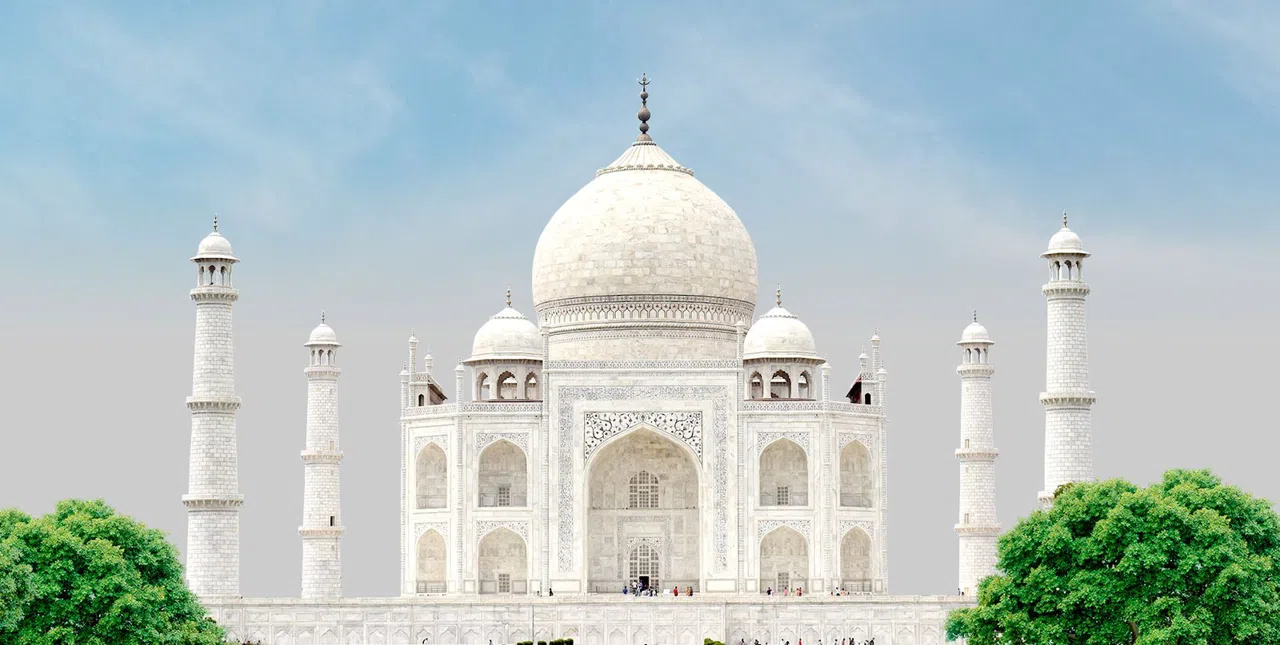
You leave Delhi in the dark, and for the first two hours there is nothing to look at but the expressway, the toll plazas and a thermos of tea going cold on the seat beside you. The light comes up somewhere short of the river, and by the time you are standing in the security queue the marble has already changed colour twice. September is the month this trip works in your favour. The monsoon has rinsed the haze out of the sky, the Yamuna behind the mausoleum is running full, and the crowds that own the place from October onward have not turned up yet.
What a full day out of Delhi actually looks like
There are two versions of this trip and they are not interchangeable. The train version starts at Hazrat Nizamuddin and puts you down at Agra Cantt railway station (the cantonment, on the far side of town from the monuments) in roughly a hundred minutes on the fast morning service. Fares run about ₹800–1,600 each way depending on class, and the forecourt has prepaid taxi and e-rickshaw counters that get you to the gates in twenty to thirty minutes, traffic depending. You arrive mid-morning, which means you have traded sunrise for a lie-in.
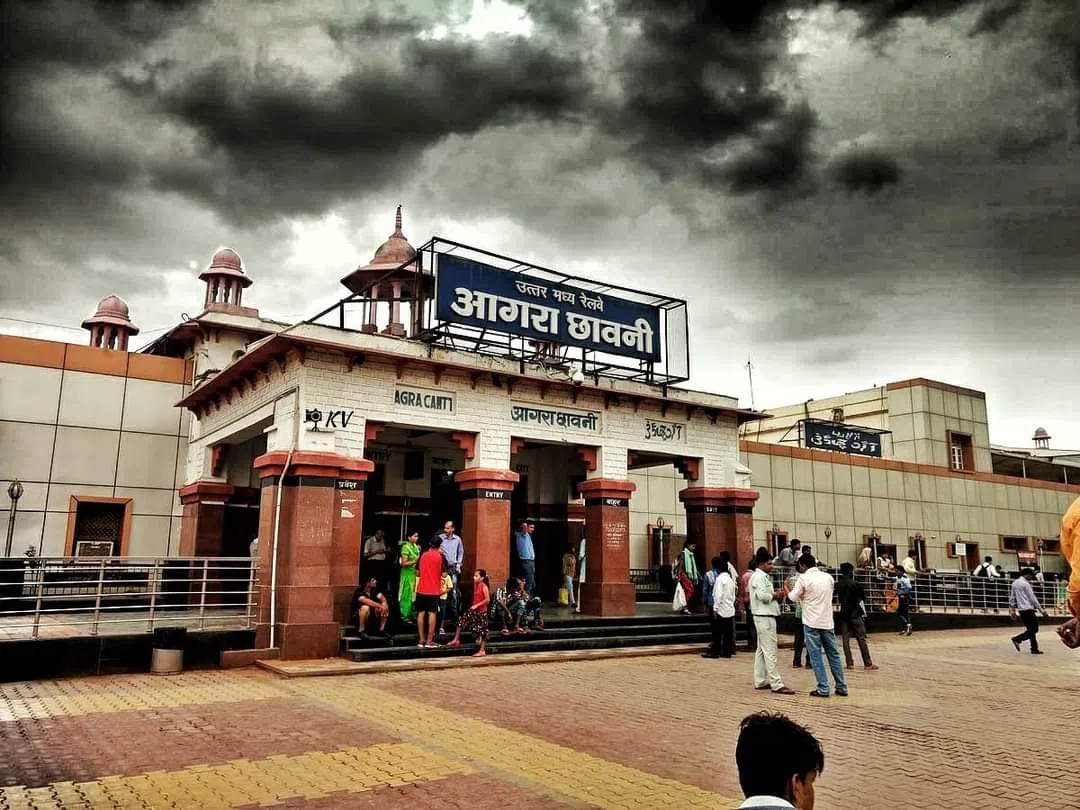
The car version leaves your Delhi hotel between five and six in the morning, runs the expressway, and takes three and a half to four hours each way, noticeably longer if you push the departure into the city's morning peak. It costs you sleep and buys you the first hour of light, which is the reason to do it at all.
Guided full-day options run six days a week (Monday, Tuesday, Wednesday, Thursday, Saturday and Sunday) and start from around 100 USD per person. For a party of two or three, that covers a driver who waits all day, the entry fees and a licensed guide at the gate, and it is not a bad trade against assembling the same day yourself. If you are still shaping the rest of the week around it, the Delhi guide handles the city end.
The ticket you buy and the three hours it gives you
The Taj Mahal (Tajganj, on the south bank) opens thirty minutes before sunrise and closes thirty minutes before sunset, and it is shut every Friday. Foreigners pay ₹1,100 in combined ASI and ADA entry plus a ₹200 supplement to go up onto the plinth and into the mausoleum itself, about ₹1,300, roughly fifteen US dollars. Indian nationals pay ₹50 plus the same ₹200 supplement, SAARC and BIMSTEC passport holders ₹540, and under-15s go free.
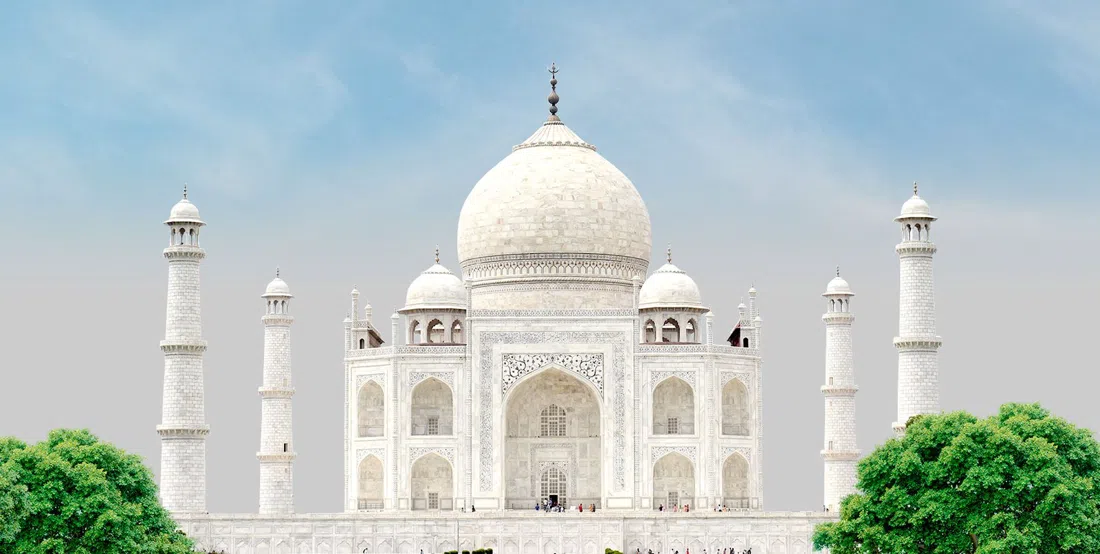
The ticket is time-stamped and valid for about three hours, which is the part people miss. That is generous for the enclosure itself and tight if you dawdle over breakfast first, so start the clock when you actually intend to walk in.
Groups enter through the West (Amar Singh) or East gates; the South gate is exit-only, which catches out anyone who has worked out that it is the closest one to the Tajganj lanes. Security screening is per person and it is slow with a large party. The sensible move is to break into twos and threes at the checkpoint and regroup inside at the Great Gate, rather than standing in one twenty-strong clump while a single officer works down the line.
What you see once you are past the Great Gate
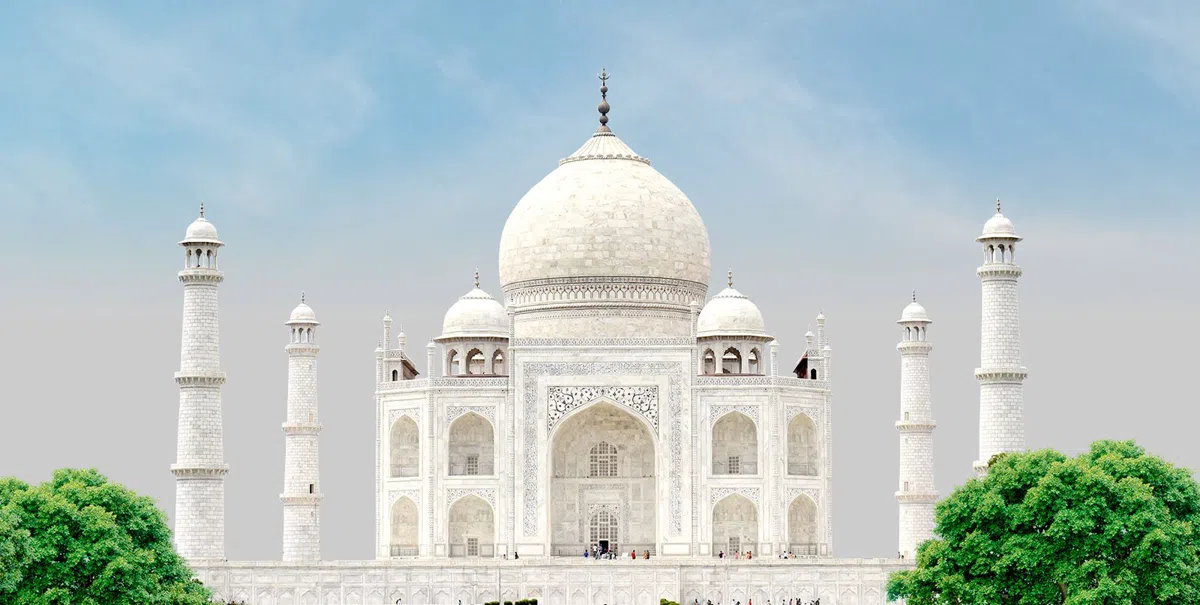
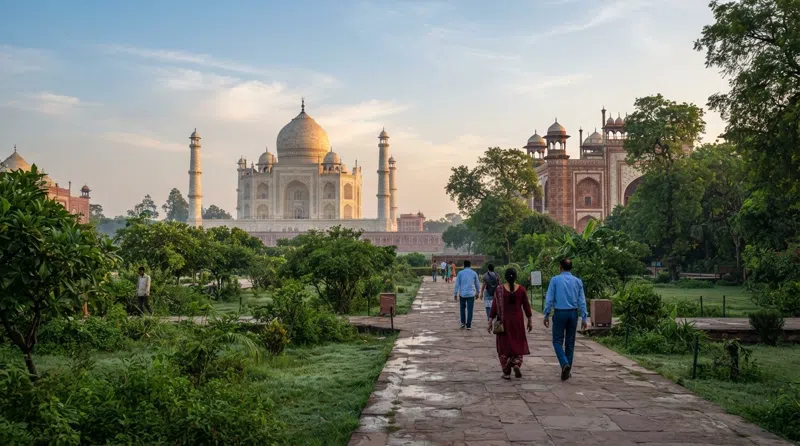
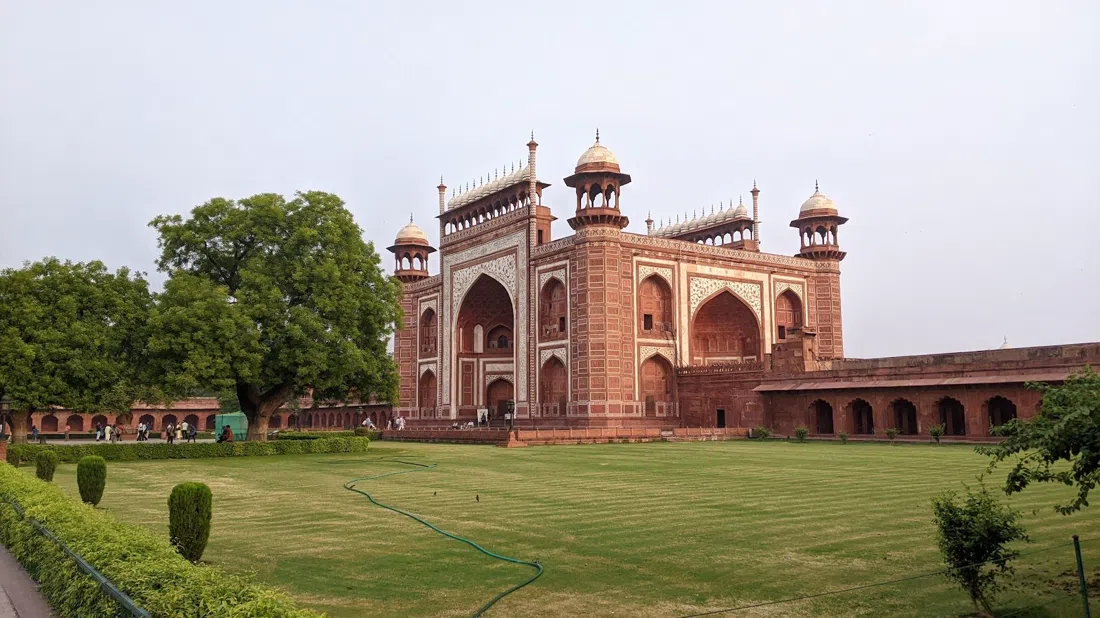
The Great Gate does exactly what it was built to do: it frames the mausoleum as a small bright object at the end of the water channel and then releases it as you walk through. The first ten minutes are crowd choreography as much as architecture. Everyone stops at the same spot, so if you keep walking for thirty seconds you get a cleaner view and a cleaner photograph than the people who did not.
Up close, the marble is not a flat white surface. It is inlaid with semi-precious stone in flowering vines and Quranic script, and the panels reward standing still for a minute rather than circling the plinth at speed. Shoes come off or go into covers before you step up. Inside the chamber the light is low, the acoustics are extraordinary, and photography is not allowed, which is why the inlay work reads better in the memory than on a phone. The mosque to the west and its mirror building to the east are both worth the detour off the axis; the crowd almost never goes there.
The one air-conditioned room inside the enclosure
Taj Museum (inside the complex, on the western side) opens 10:00–17:00 on the days the site is open and costs nothing extra on top of your entry. The rooms are small, so guided parties filter through in twos and threes rather than arriving en masse, and it is usually close to empty. It is also the only place in the enclosure with air conditioning, which in September matters more than you expect. It holds the original construction drawings and the celadon ware said to change colour in the presence of poison.
The monuments that pair with it
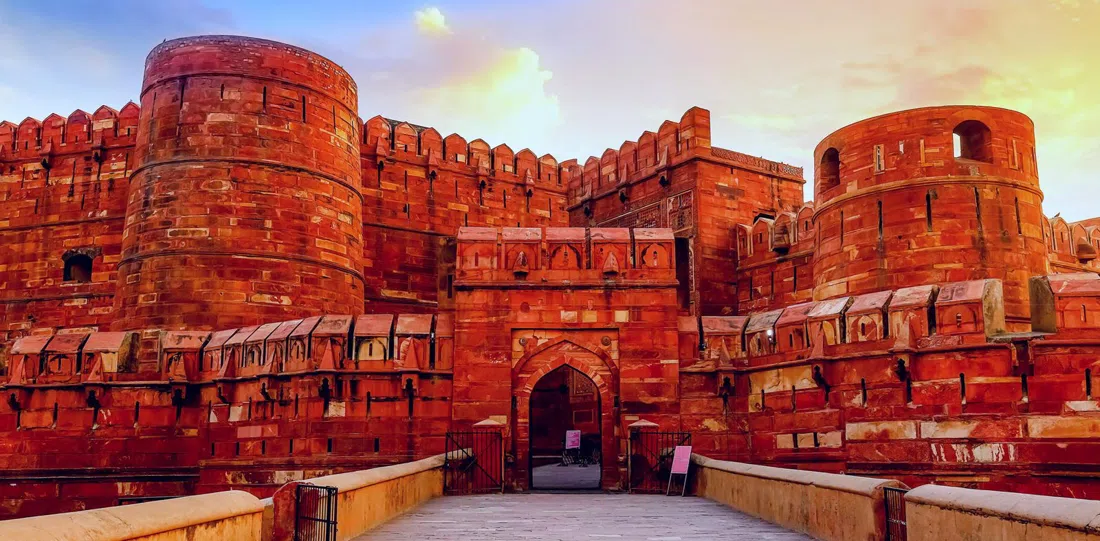
Agra Fort (on the riverfront, north of Tajganj) is open daily 06:00–18:00, Fridays included. Foreigners pay ₹650, Indian nationals ₹50, SAARC and BIMSTEC ₹90, under-15s free; the audio guide is ₹150 and the battery buggy ₹20 a head. Wide ramps and big courtyards swallow coach parties without ever feeling crushed. Go for the Musamman Burj, the octagonal tower where Shah Jahan was held by his son and could see the mausoleum he built for his wife. That view is what gives the Taj its story rather than just its silhouette.
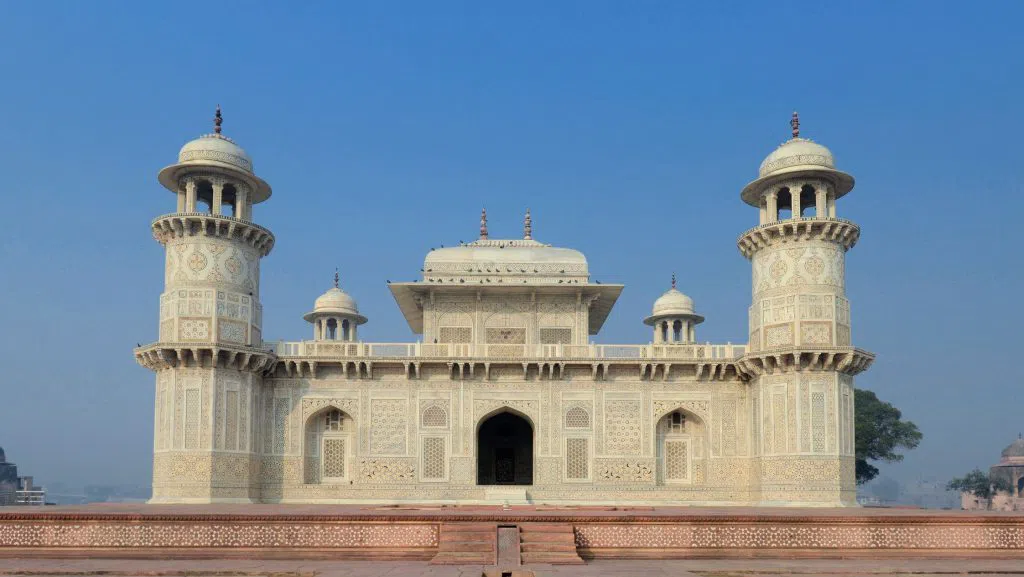
Tomb of I'timād-ud-Daulah (east bank) is the one most day trips skip and shouldn't. Foreigners pay ₹550 plus a ₹500 ADA toll that is waived on Fridays and shared across the city's ASI sites on the same day; Indian nationals pay ₹40 and under-15s go free. It is open sunrise to sunset daily. The interior is a single small room and only takes a few people at once, so tours give it thirty to forty minutes, which is enough. This was India's first all-marble tomb and the prototype for the inlay you are not allowed to photograph inside the Taj.
Fatehpur Sikri (40km west) is the standard second monument on a long day and the honest warning is that it adds two hours of driving. The palace complex runs about ₹550–610 for foreigners and ₹40–50 for Indian nationals; the Jama Masjid and dargah are free and a separate enclosure, open daily 06:00–18:00. Unofficial guides and shoe-minders at the Buland Darwaza work groups hard and will not take a first no. Add it and your Delhi day becomes a sixteen-hour one.
The north bank, where September earns its reputation
Mehtab Bagh (Kachhpura, directly across the river) is a Mughal garden laid out on the mausoleum's own axis, open sunrise to sunset every day including Friday, at ₹300 for foreigners, ₹25 for Indian nationals and free for under-15s. In September the Yamuna is full, so the garden works the way it was laid out to work and you actually get the reflection. The pinch point is the river wall at sunset. Get there before the light goes rather than after, because everyone else arrives at once.
Taj View Point (Agra Development Authority) is the terrace immediately next door and it plays by a different rulebook: no advance booking, walk-up groups fine, open on Fridays and after dark. Days cost ₹200 for foreigners and ₹50 for Indian nationals, after sunset ₹500 and ₹200. It is the fallback that saves a badly timed Friday trip.
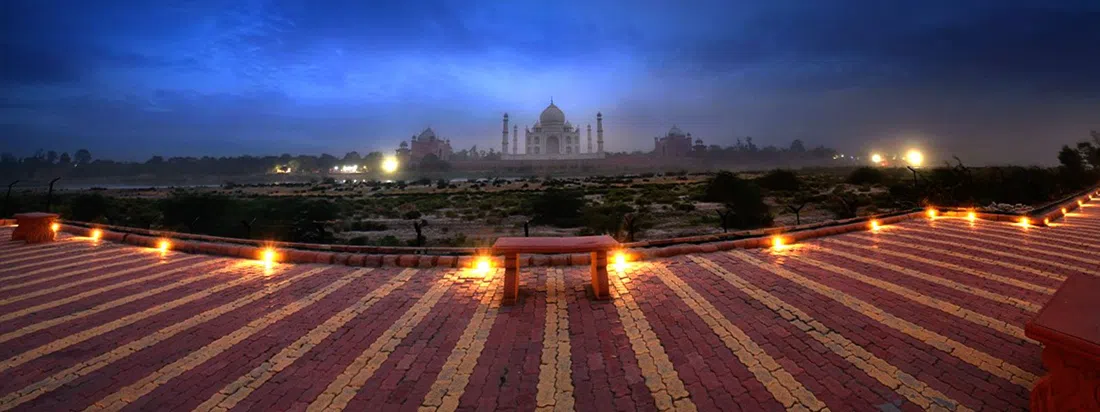
Mughal Heritage Walk, Kachhpura (the village behind the garden) runs 09:00–18:00 at about ₹1,250 for adults and ₹750 for under-13s, led by trained local guides and finishing at Mehtab Bagh. It is a CURE India community project, documented on the monument's own official site, and it is the one item on a day trip where the money demonstrably stays in the neighbourhood. Book ahead for anything more than a handful of people: it is built for small groups, not coaches.
Tajganj after the monument
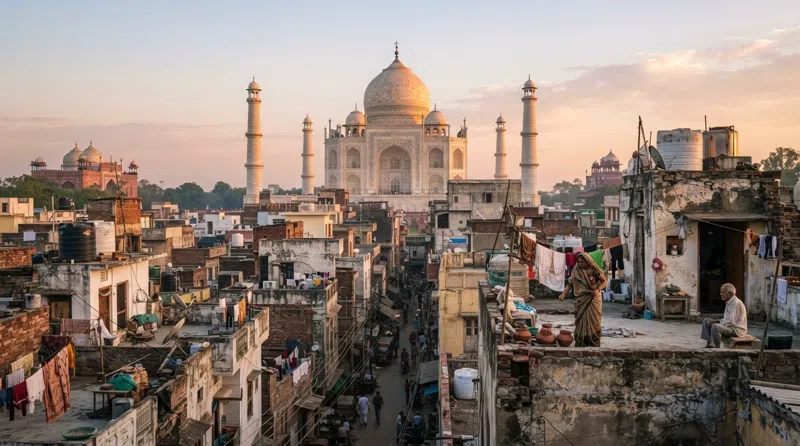
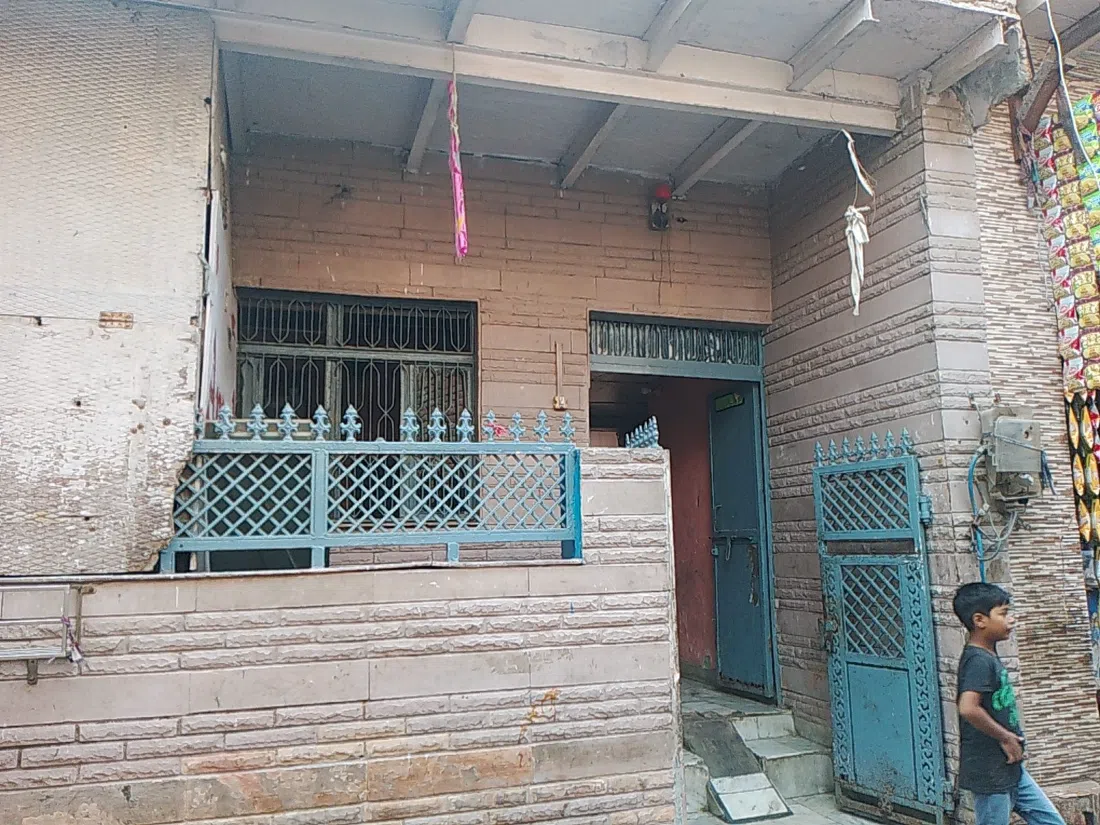
Most Delhi day trips treat Tajganj as a car park with a monument attached, and that is a poor reading of it. It is a working quarter of marble workshops, guesthouses and lanes that get very narrow very quickly, and it is worth an hour on foot.
Sheroes Hangout (Tajganj) is open 10:00–19:00, staffed by survivors of acid attacks, with profits going to reconstructive surgery and legal aid. Café prices, donation-led, handicrafts extra. The room is small, so call ahead for more than about ten people. It is a real reason to stay put after the monument instead of bolting for the car.

Saniya Palace Restaurant (Chowk Kajziyan, five minutes on foot from the South Gate) is a walk-in rooftop with maybe thirty seats and mains around ₹200–450. Come for the roof and the near-free view, not the cooking, and send one person up to scout before twenty of you climb the stairs.
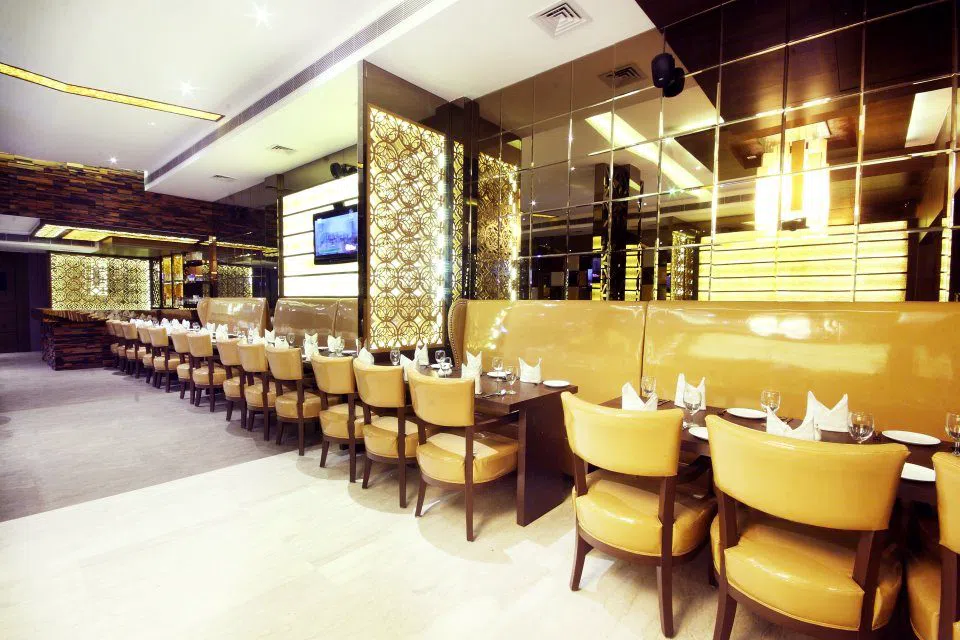
Pinch of Spice (Fatehabad Road) is the reliable mid-range lunch, ten minutes from the gates, with mains at roughly ₹350–700, a buffet and a bar. Order the Railway Mutton or the Chicken Rara. There is a second branch at Sanjay Place that is a different, quieter room. Book if you are a large party at peak hours.
Taj View Terrace, Hotel Taj Resorts (beside the East Gate) opens 19:00–23:00 and takes groups properly: terrace capacity around sixty, bookable on +91 7060105001, mains about ₹300–600, Indian, Chinese and continental. It is the natural sit-down dinner before the drive or the train back to Delhi, with the mausoleum lit by moonlight over the parapet.
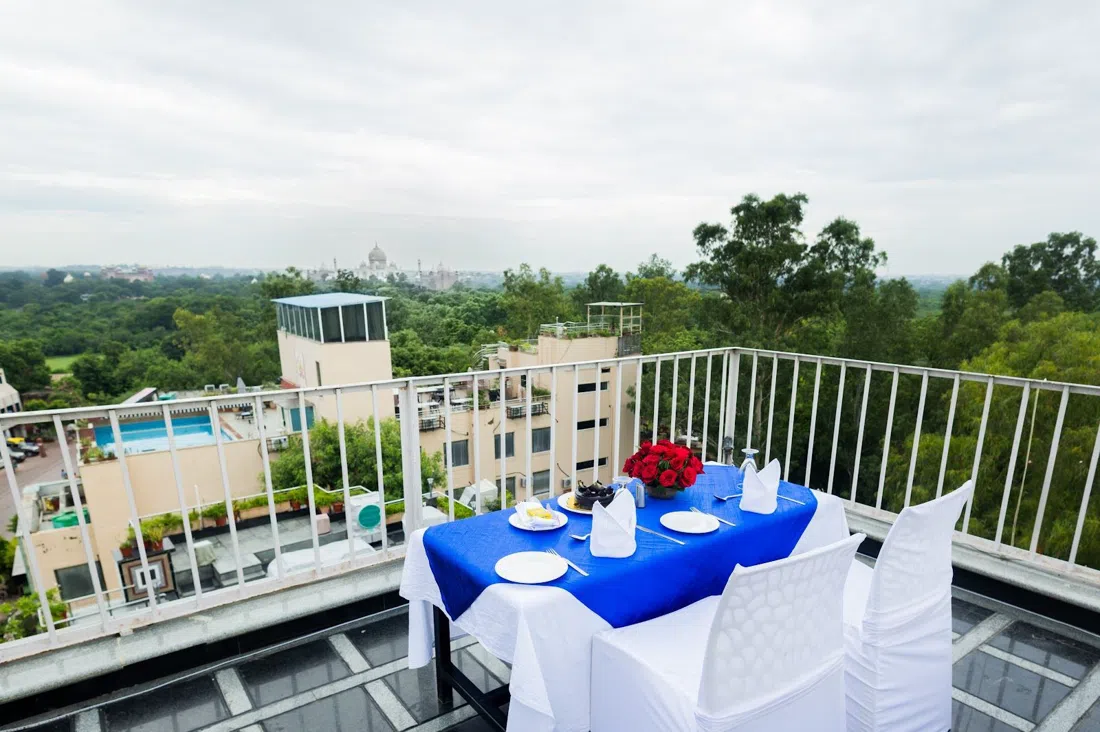
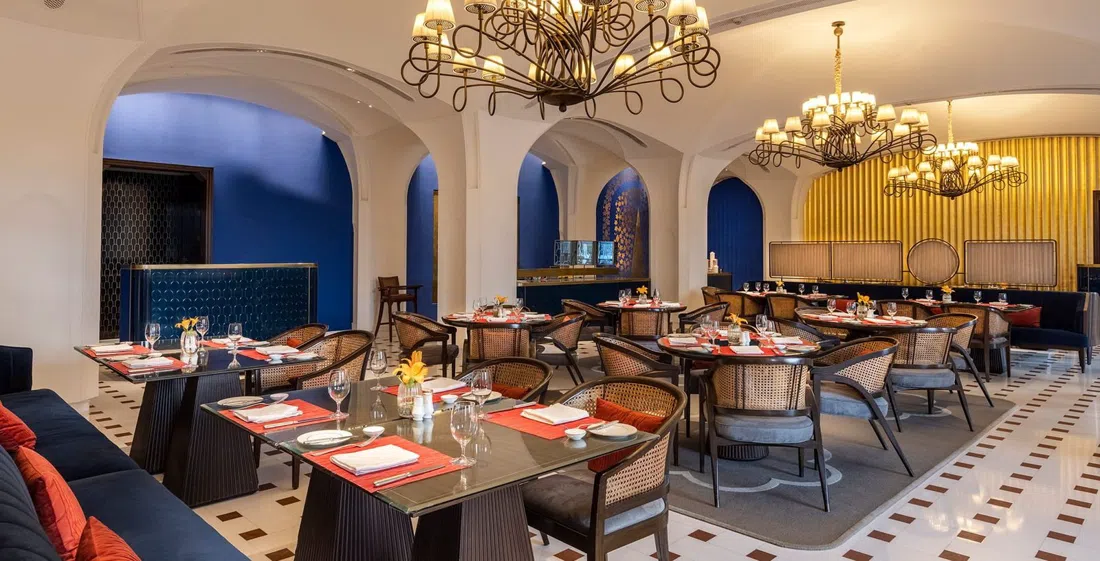
The Oberoi Amarvilas (Taj East Gate Road) is the splurge end. Every table has an unobstructed view from six hundred metres. Reservations are essential; Esphahan is small, candlelit and has live music, so it suits two, while Bellevue is the all-day room that copes with a group. Expect ₹4,000 and up per head at Esphahan; afternoon tea and lunch at Bellevue are considerably cheaper, and non-residents can book both.
The last mile and the Friday problem
Taj East Gate metro station (Yellow Line) has been open since March 2024 and drops you a few hundred metres from the East Gate for a ₹10–30 fare, air-conditioned, no booking. It is the fastest way to sidestep the Fatehabad Road jam if you are travelling independently or in a small group; coach tours still use the Shilpgram parking area. Battery buses and golf carts cover the final stretch free on a foreigner ticket.

Friday shapes this whole trip. The mausoleum is closed, and the fast train does not run either, which is why train-based day trips out of Delhi are a six-day-a-week proposition. If you are stuck with a Friday, the day still works: Agra Fort, Fatehpur Sikri, Mehtab Bagh and the Baby Taj are all open, the ADA toll on the Baby Taj is waived that day, and the ADA terrace on the north bank will give you the view after dark.
Is it worth doing from Delhi
Yes, with one caveat. It is a twelve-hour day minimum and a sixteen-hour one if you add the abandoned capital, and you will spend a third of it in a vehicle. What you get back is a building that does not disappoint in person, the rare famous thing that is better than its photographs, plus a fort with a genuinely affecting story and a river garden that most visitors never cross the bridge to see.
It suits almost everyone, but differently. Couples should take the sunrise slot and the north bank at dusk and skip Fatehpur Sikri entirely. Families with young children should take the train, do the monument and the fort, and go no further. Photographers want September precisely because the air is clean after rain. The guided full-day options carry a lot of history behind them, and the top-rated one holds 4.9 out of 5 across 4,641 reviews, a reasonable signal if you would rather not organise gates, tickets and a driver yourself.
Best time to go in September
Within the month, aim for the second half. Early September can still deliver heavy monsoon afternoons; by the last ten days the rain is usually intermittent, the humidity is dropping and the sky is about as clear as it gets all year. Temperatures sit high and the humidity is real, so the enclosure is genuinely tiring by eleven in the morning.
Within the day, sunrise is the single best queue-avoidance move available. The gates open thirty minutes before sunrise, the first hour is cool, the marble goes through its whole colour range, and the coach groups have not arrived. Midday is the worst of everything: hardest light, hottest stone, thickest crowd. Late afternoon recovers some of it and hands you the north bank for the last hour, with the river full enough in September to actually hold a reflection.
Avoid Fridays for the mausoleum, and be aware that weekends bring far more domestic visitors than midweek. A Tuesday or Wednesday in the last week of September is about as good as this trip gets.
Practical notes before you leave Delhi
Carry your passport. Foreigner tickets are name-checked and it is also what gets you the free battery bus. Carry cash in small notes as well as a card: entry and most restaurants take digital payment, but e-rickshaws, shoe-minders and the little things do not reliably. Leave tripods, drones and large bags behind; cloakrooms exist at the gates but queuing twice for one is a waste of your three hours.
Budget roughly: entry at ₹1,300 for a foreign adult at the mausoleum, ₹650 at the fort, ₹550 plus toll at the Baby Taj, ₹300 at the river garden. Add ₹800–1,600 each way if you take the fast train, or a full-day car and driver if you don't. Lunch is ₹350–700 a head at the mid-range places, a few hundred on a rooftop, ₹4,000 and up if you are doing the luxury dinner. Water and one long break in the air conditioning are not optional in September.
Book the return leg before you go. The single most common way this day falls apart is an open-ended evening that turns into a midnight arrival back in the capital. If a 4am start sounds like a bad idea from wherever you are staying, the Delhi hotel search will tell you what is near the station and what is near the expressway exit. On this trip, that choice is worth an hour of sleep.