By the third week of November the sound arrives before anything else: a brass band two streets away, playing a film song at a volume that bears no relation to the width of the lane, then a generator, then a horse. From that week until the end of February, Delhi turns itself into a machine for marrying its own residents, night after night, in tented lawns and hotel ballrooms and farmhouse compounds most visitors never learn exist. The weddings themselves are private. The supply chain that assembles them is not, and it is open to anyone willing to walk into a market at eleven in the morning.
That is the useful thing to know about winter here. You are not going to get inside somebody's shaadi, and you should not try to. What you can do is watch the city build one, from the gold thread upward, in lanes that were doing this work long before the hotels existed. This piece follows that chain in roughly the order the wedding itself does, from the markets to the flowers, the clothes, the band and the venue, with the timings, the closing days and the door realities that decide whether a morning works or is wasted.
Why the season starts and stops when it does
Two calendars set the dates. The first is the Hindu almanac, which fixes auspicious wedding days, muhurats, in clusters rather than evenly through the year, and there is a well-known pause of roughly a month from mid-December to mid-January when almost nobody marries. Arrive in that window and the markets will still be busy restocking, but the streets go quiet after dark. Late November, early December and the whole of February are when the city is loudest.
The second calendar is the weather, and it is blunter. November brings the worst air of the year; if your lungs object to that, come in February instead, when the days sit comfortably in the low twenties. January nights get genuinely cold, single figures, with fog thick enough to close the airport for hours, which is why the outdoor dinner is always ringed with gas heaters. Bring a real jacket. Anyone who packs for a warm country rather than a north Indian winter regrets it at the 11pm dinner service.
The lanes where a wedding is assembled
Almost everything visible at a Delhi wedding (the groom's turban, the invitation, the bride's bangles, the strings of light over the tent) is bought within about a square kilometre of Chandni Chowk, mostly wholesale, mostly in lanes too narrow for a car. It is the most concentrated thing in the city, and the cheapest morning you will spend here.
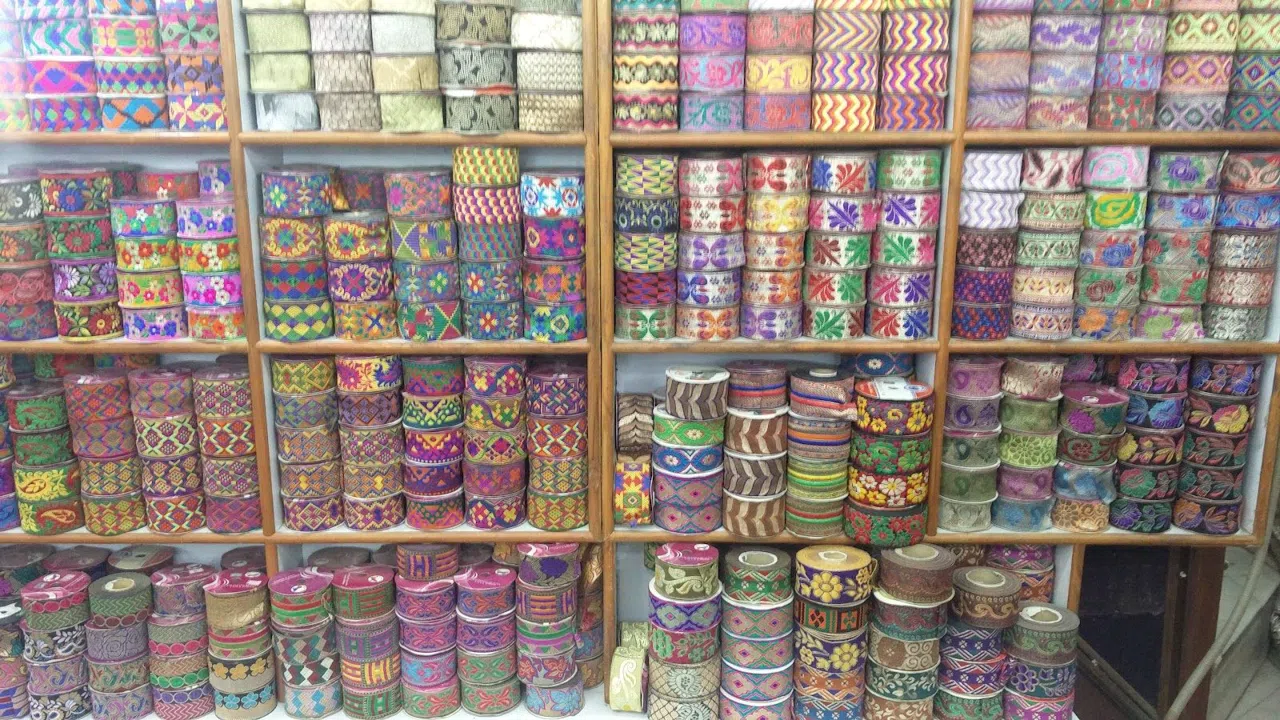
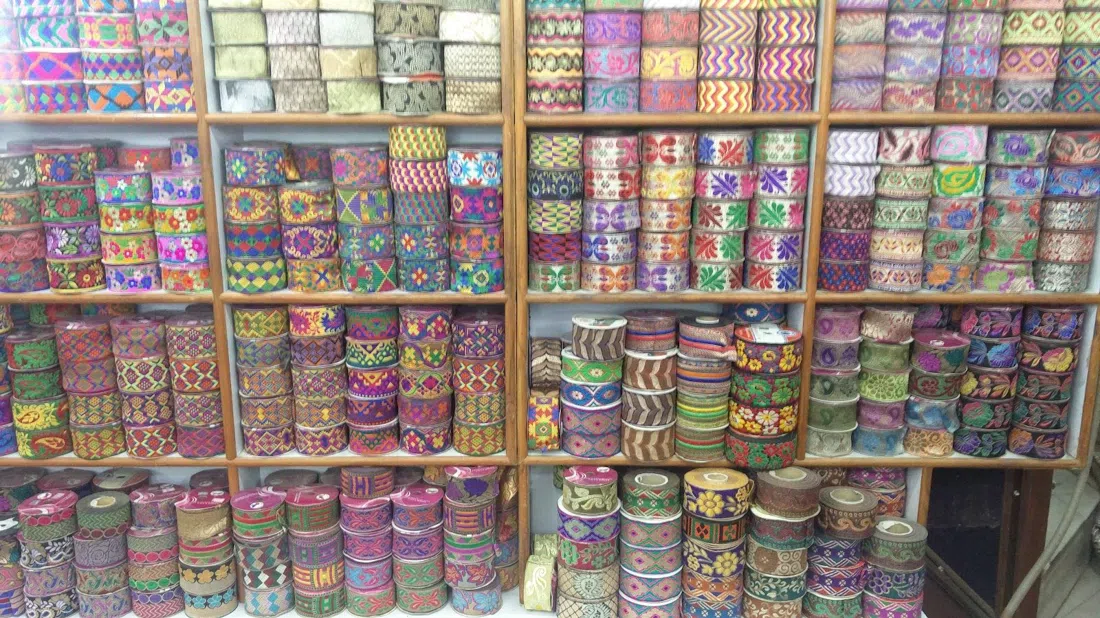
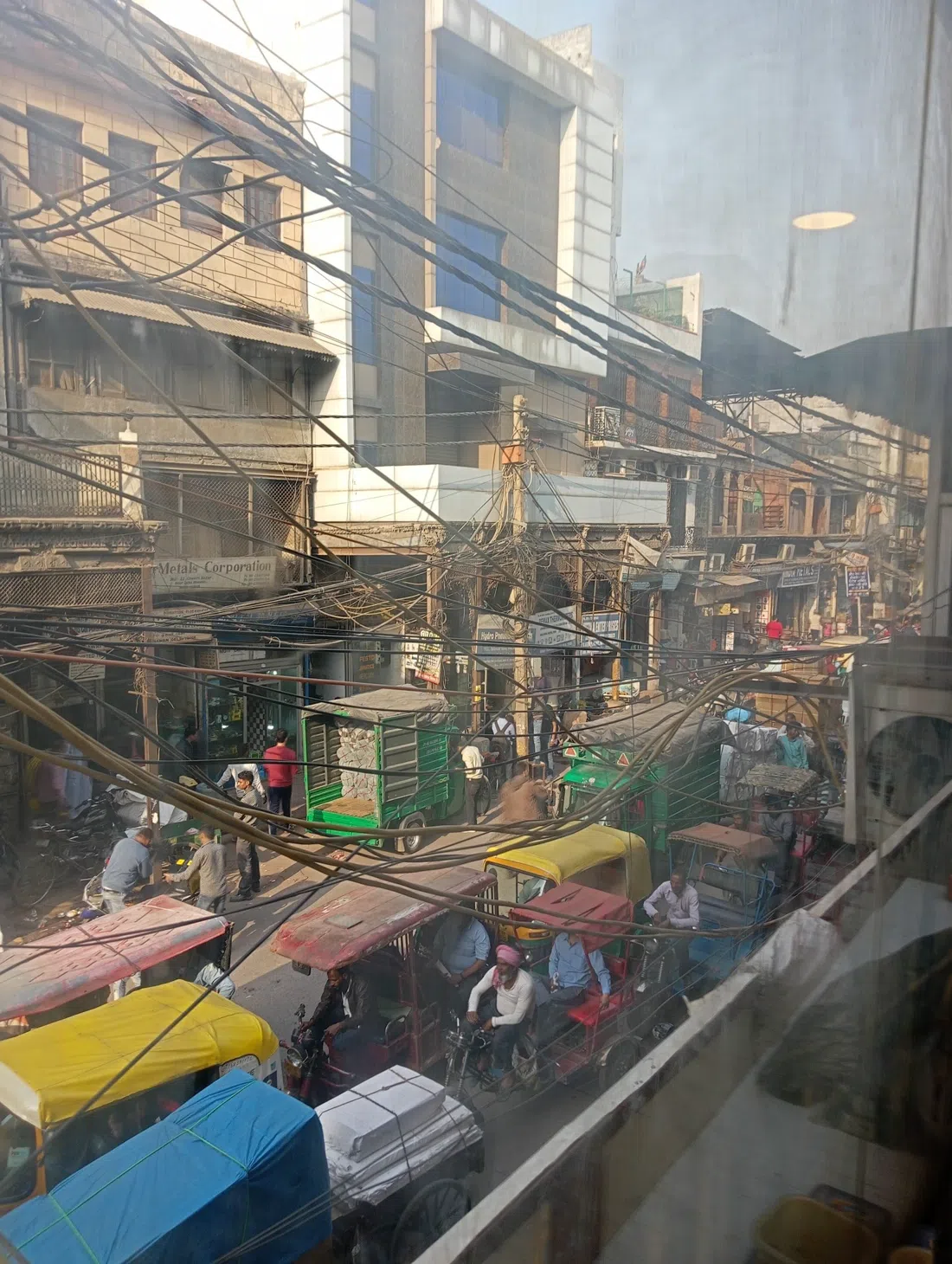
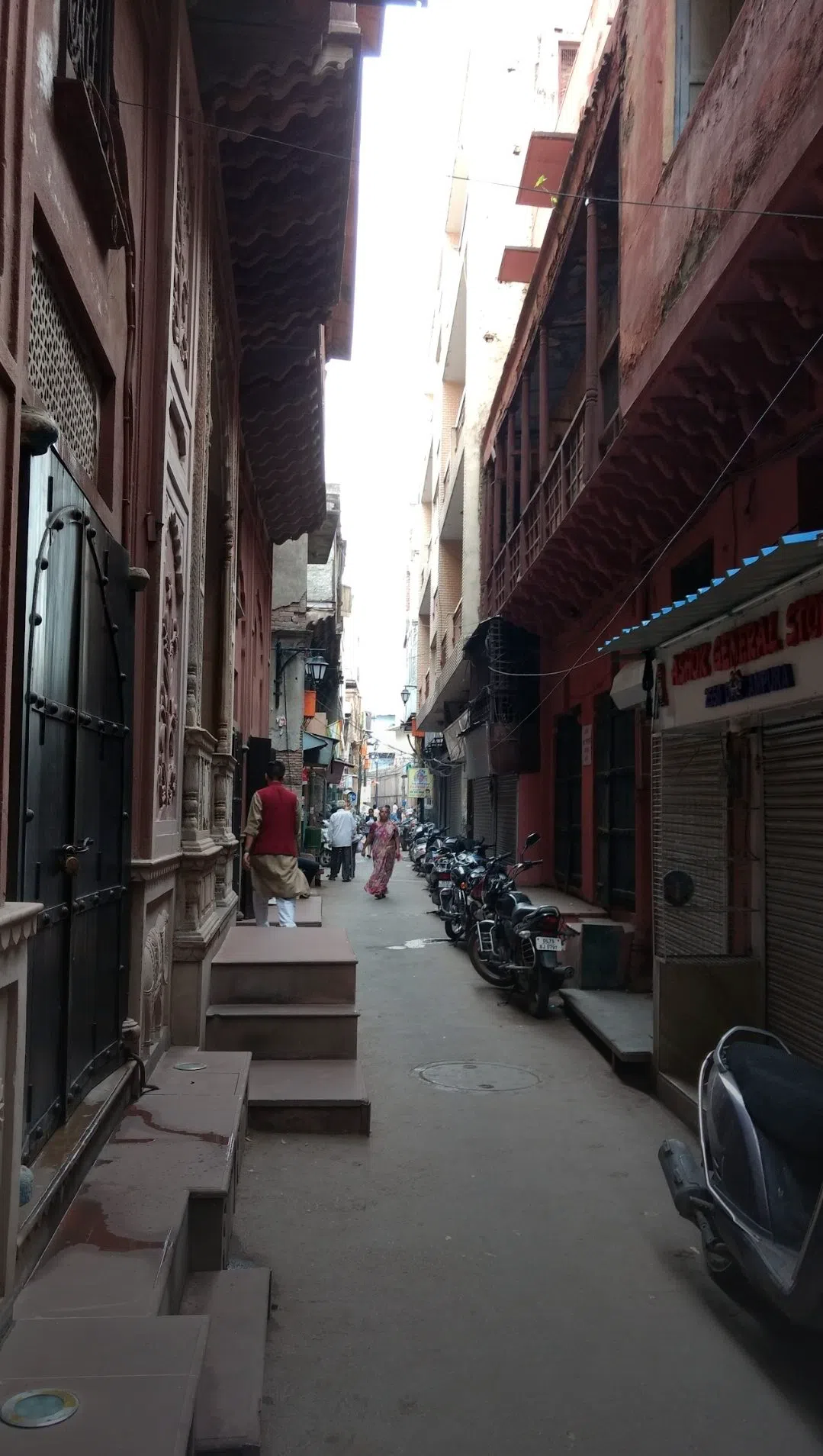
Start at Kinari Bazaar (Old Delhi, off Chandni Chowk), the trimmings market where the gold thread on every sherwani in the city begins its life. There is no door and no ticket, and browsing costs nothing; trims start around ₹20 a metre and a ready-tied safa runs ₹300 to ₹1,500. The constraint is physical, not social. The gali is under two metres wide and in season it jams solid by mid-afternoon, so any group larger than three walks single file and goes between 11am and 1pm. It is closed on Sundays.
A few minutes away, Chawri Bazaar (Old Delhi) handles the invitation, which in this city is the opening statement of the wedding's budget rather than a formality. This is the country's largest wedding-card market, entirely walk-in, and shopkeepers expect browsers; they will happily pull down sample books for a group that buys nothing, because their real orders start at a hundred cards and go up steeply. Individual cards run ₹15 to ₹500. Open roughly 10:30am to 8pm, shut Sundays.
Dariba Kalan (Old Delhi) is the jewellery half of the same engine and has been trading since Mughal times. Silver sells by weight, roughly ₹120 to ₹160 per gram plus making charges, and if a shop wants to price by the piece rather than the scale, leave. Insist on BIS hallmarking. The shops themselves are tiny, four to six people at a squeeze, so a group of eight should split across neighbouring stores rather than trying to occupy one. Many shops take Monday off and most take Sunday.
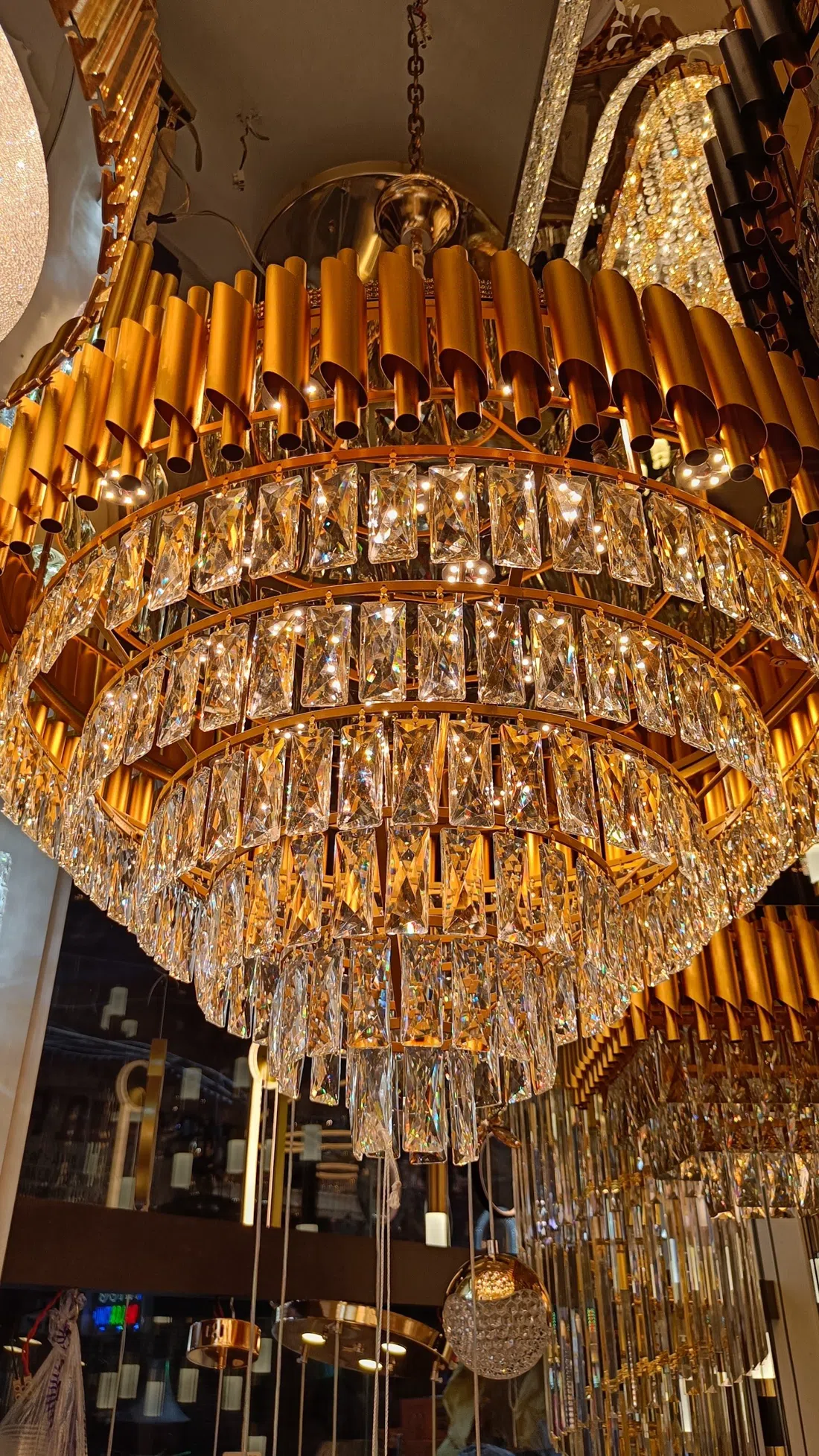
Then the light. Bhagirath Palace (Old Delhi, off Chandni Chowk) is Asia's largest electrical market and the source of every jhaalar strung over a wedding gate and every illuminated headpiece carried by the light-bearers walking beside the groom. Fairy-light strings start at about ₹10; chandeliers begin around ₹2,000. It is a warren, and the corridors between the lit stalls are dark and dense, so keep your bag in front of you rather than behind. Roughly 11am to 7pm, Sundays patchy.
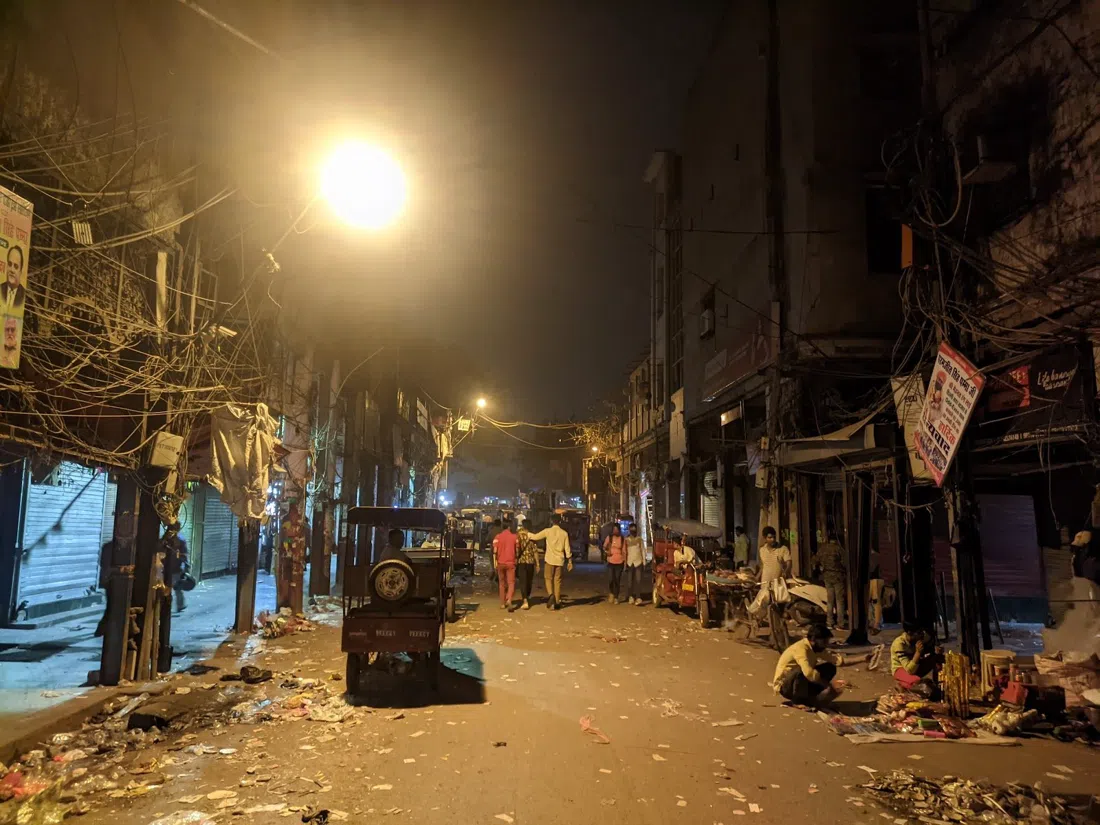
The last of the five is the one to treat with respect. Sadar Bazaar (west of Old Delhi) is where the decorators and tent houses actually buy: pure wholesale, decor items ₹10 to ₹200, minimum quantities common. There is no door policy because there is barely a door, and it is genuinely overwhelming. Come in a small group, agree a meeting point before you enter, and arrive by 11am. After 2pm it becomes close to impassable, and it shuts on Sundays.
Four in the morning at the flower market
The best hour of the whole season is one almost no visitor sees. Ghazipur Phool Mandi (east Delhi) is the city's largest wholesale flower market, and in wedding season it moves marigolds, roses and tuberose by the sackful to every tent house in the region. Trading starts around 3am and is effectively finished by 11; arrive before 7am or there is no point going at all. Entry is free, there is no ticketing and no door policy, and garlands sell from about ₹20.
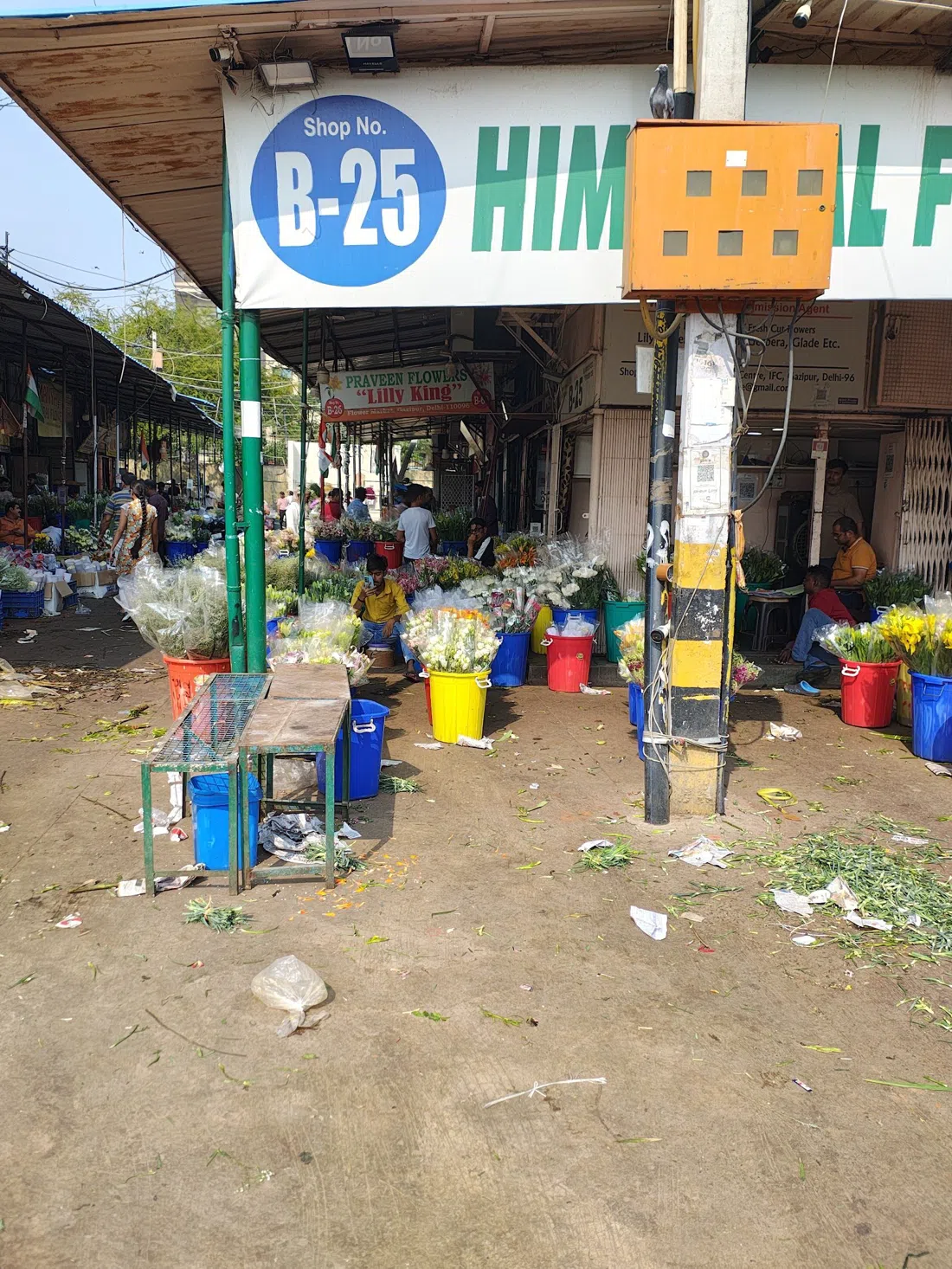
The practical problem is getting there. The metro does not start running early enough (first trains are around 6am), so a pre-dawn visit means a taxi, booked the night before, and a driver who will wait. Several Delhi operators run small-group dawn photography sessions here, which solves the transport and gives you someone who knows which aisles tolerate a camera; if you go independently, ask before photographing a trader's stock. Wear shoes you do not mind soaking. The floor is petals and water.
What the couple wears
There are two ends of this market and both are worth seeing, because the gap between them explains most of what you will see on the street.
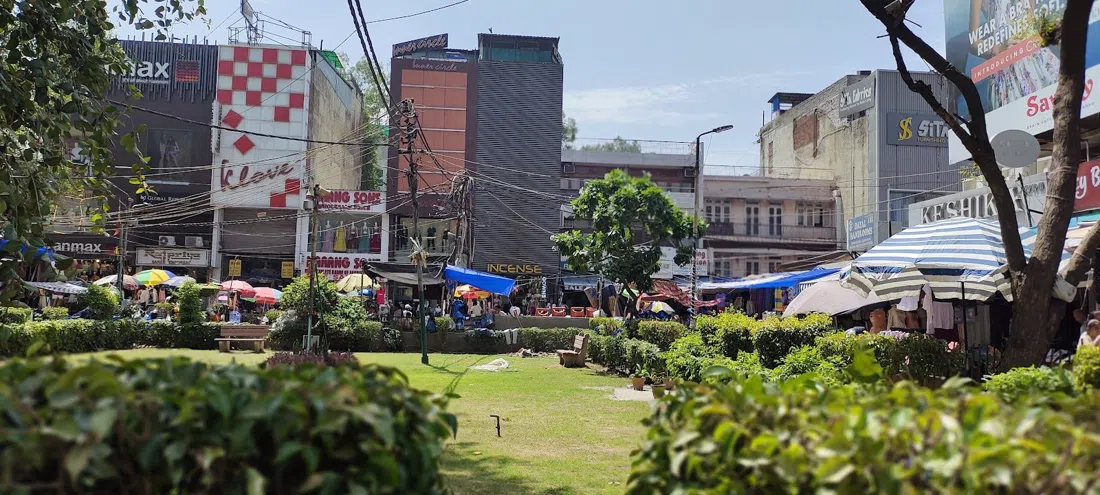
The everyday end is Lajpat Nagar Central Market (south Delhi), an open market with no door policy where lehengas run ₹2,000 to ₹30,000 and the mehendi artists work walk-up along the edge of the lane, from about ₹150 a hand. This is where a very large share of Delhi's brides and, more to the point, the bride's cousins and colleagues actually shop. It is the least touristed stop on this list and the easiest place to get your own hands done. The artists will take a whole group in sequence, so allow twenty minutes a person and do not plan to handle anything for an hour afterwards. Closed Mondays.
The other end is in Mehrauli, at the southern edge of the city, where two couture houses sit five minutes apart. Sabyasachi (Mehrauli) opened its flagship at The Citadel on One Style Mile in August 2026, and even with no intention of buying it is the most theatrical retail interior in the country, floor to ceiling with portraits, lamps and layered colour. The store is browsable and costs nothing to look at, but bridal is appointment-led and a host will walk a group through rather than leave you to wander; the high-jewellery salon is by appointment only. Bridal lehengas start around ₹4 lakh and climb into figures that are not typos. Open daily 11am to 7pm.
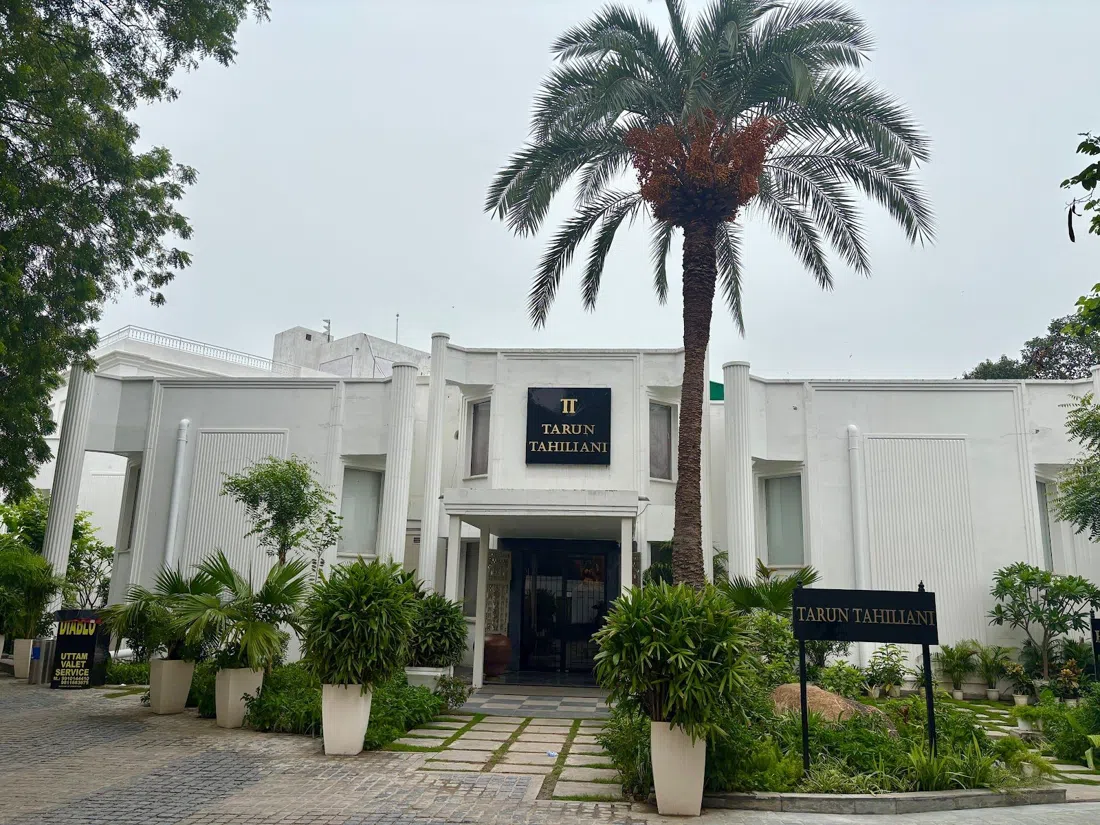
Tarun Tahiliani (Mehrauli) is the pastel, Swarovski-worked counterpoint to all that maximalism, and the sensible move is to do both in one afternoon. Walk-in browsing is welcome and fittings are by appointment; small groups are fine, but a party of six or more should phone ahead rather than arrive unannounced. Bridal pieces start at roughly ₹3 lakh. Also daily, 11am to 7pm.
The band that blocks the road
The sound you will hear on any winter evening (brass, dhol, a portable generator and a groom on a white mare) is the baraat, the groom's procession, and it is the one part of a Delhi wedding that happens in full public view. Jea Band (near Lajpat Rai Market, Old Delhi) has been supplying it since 1936 and is the oldest name in the trade. A package is sized to the wedding party rather than sold by the head, covering band, ghodi, baggi and dhol, and it runs roughly ₹25,000 to well over ₹2,00,000 depending on how many musicians and how much horse.
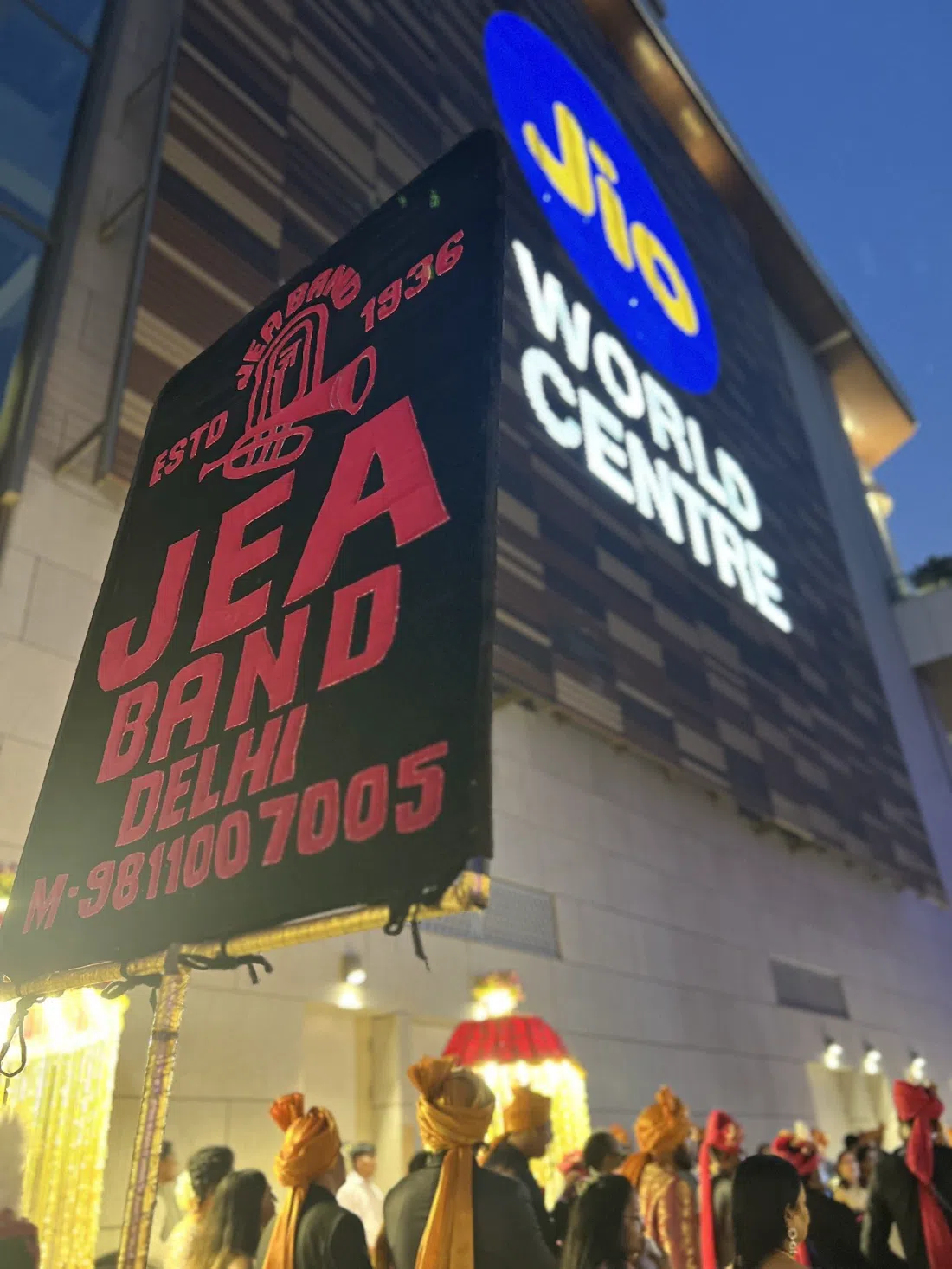
They take wedding bookings, not performances for visitors, and there is no show to buy a ticket to. Treat it as the operator to know if you are actually planning a wedding here. Otherwise it is simply the reason to stand still on a November evening when traffic stops for no visible reason. The band will come round the corner in about ninety seconds.
Ballrooms, lawns and the farmhouse belt
Where the marriage actually happens splits three ways, and the split is about scale more than money.
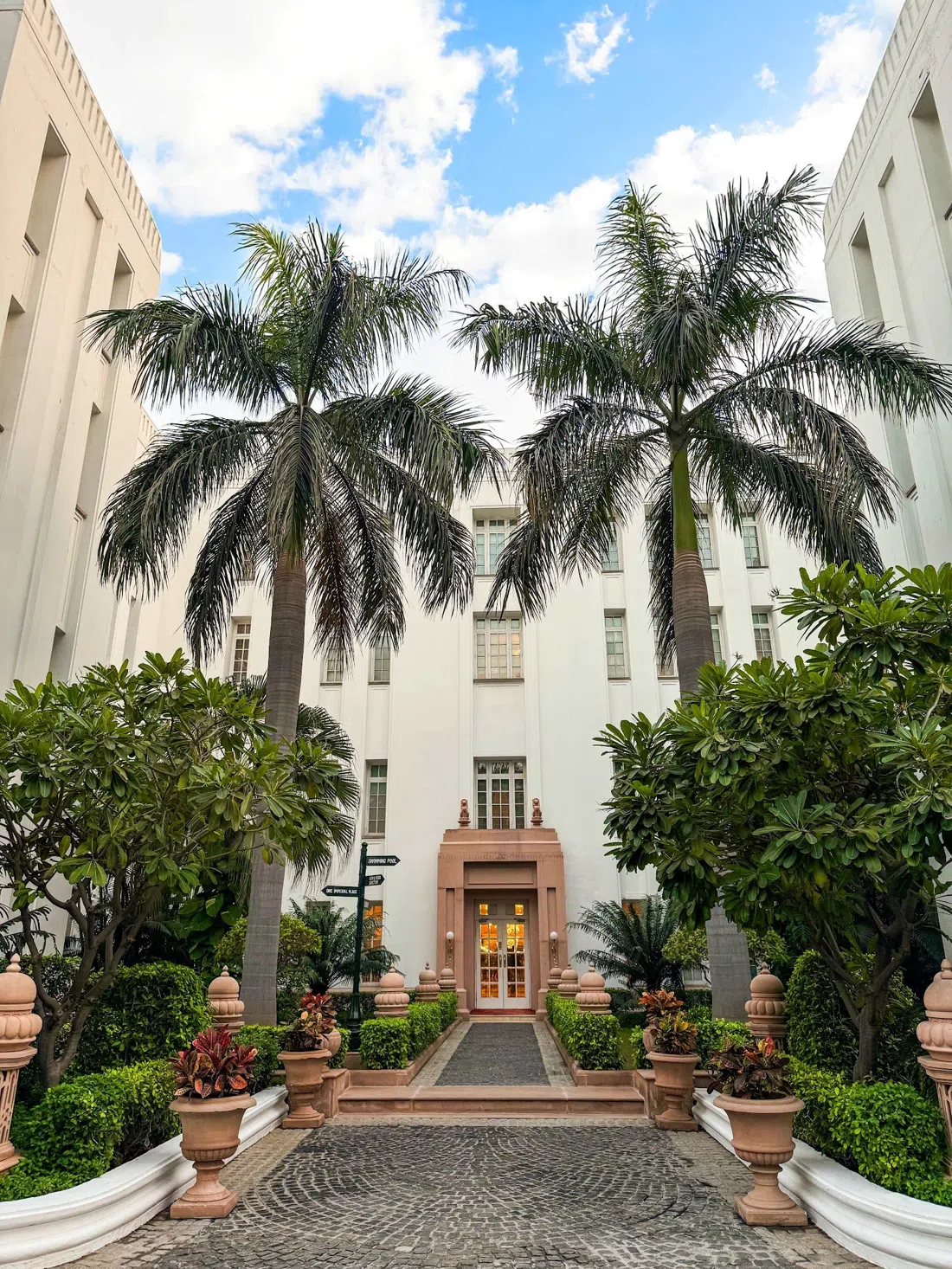
The heritage option is The Imperial New Delhi (Janpath), open since 1936, whose lawn is the only one in the city that hosted the Royal Durbar maharajas, which makes it the most legible place to see the colonial roots of the modern Delhi wedding. The ballroom seats up to 500 and the lawn takes considerably more; full weddings for 200 to 500 guests over two or three days run roughly ₹1.2 to ₹3.5 crore, with per-plate catering at ₹5,500 to ₹9,000. You do not need a wedding to get in: the bars and restaurants take ordinary bookings, and the art corridors are worth an hour on their own. Peak winter dates go 8 to 14 months out.
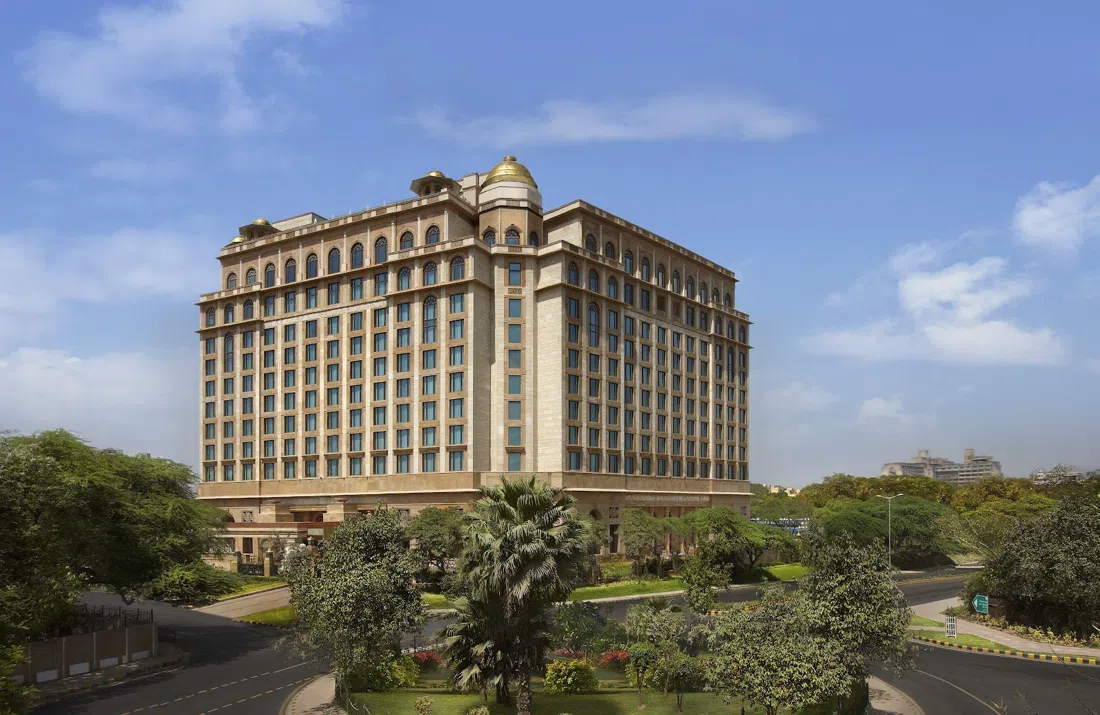
The Leela Palace New Delhi (Chanakyapuri) is the diplomatic-quarter default, opened in 2011, the newest palace in a city full of real ones, with a Grand Ballroom seating 350, or 600 floating, plus rooftop and lawn spaces that tend to get used for the sangeet and mehendi nights. Budget ₹1.5 to ₹4 crore for the same 200 to 500 guest, multi-day shape, per-plate ₹6,000 to ₹10,000. Saturdays in peak winter are booked 8 to 14 months ahead.
For the genuinely enormous version, it happens at Taj Palace, New Delhi (Diplomatic Enclave), which runs two ballrooms built for the thousand-guest wedding: Shah Jehan at 700 seated or 1,200 floating, and Durbar at 1,000 seated or 1,500 floating. Large-format weddings typically start at ₹1.5 crore, per-plate from around ₹5,000. If you want to understand the industrial scale of the season rather than the boutique version, this is the building.

Then there is the part visitors almost never see. Chattarpur, in the far south, is Delhi's actual wedding capital, a corridor of farmhouse venues, tent frames and floodlit lawns that exists almost entirely for these four months. The Tivoli, New Delhi (Chattarpur) is the one with a real hotel attached rather than just a lawn: Oakwood Hall takes 1,000, and with 130-plus rooms on site the whole party can stay put instead of convoying across the city at 1am. Per-plate runs roughly ₹2,000 to ₹4,000 and full weddings start around ₹40 lakh, which tells you how different this economy is from Janpath.
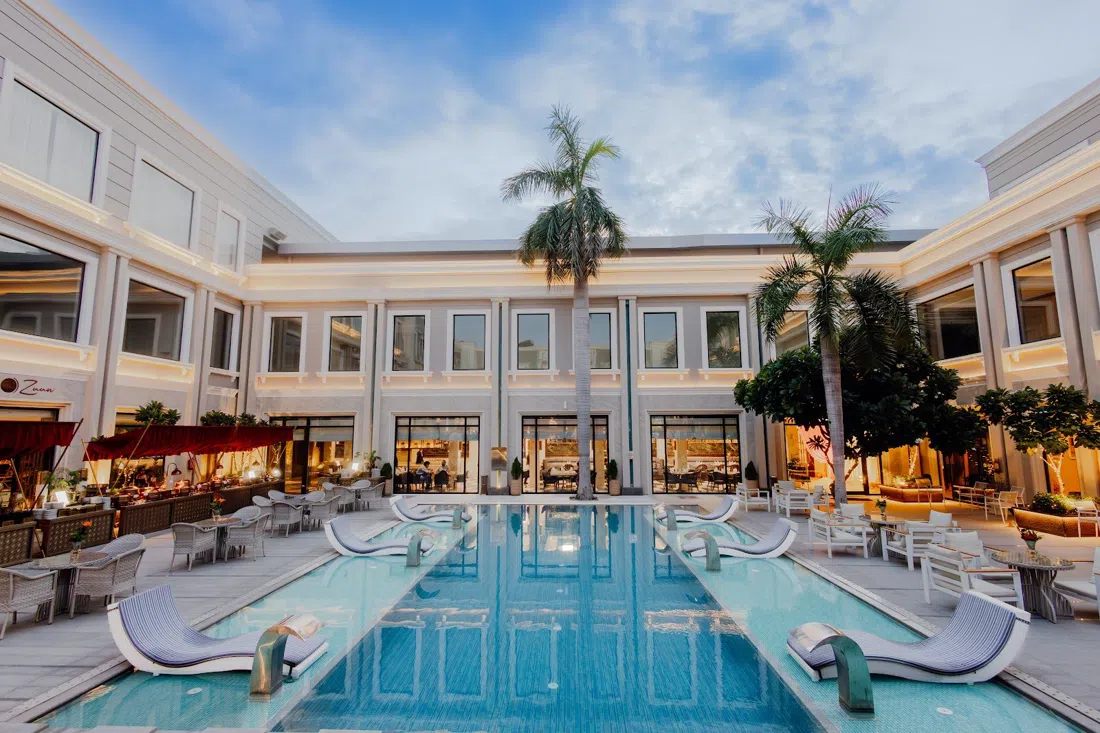
The practical outlier is The Roseate New Delhi (NH-8, near the airport), rebranded from Dusit Devarana in 2019. Book under the current name or you will get nowhere. With only 50 rooms it suits a 150 to 300 guest wedding rather than a thousand-guest one, and being ten minutes from the airport makes it the sensible pick when half the guest list is flying in. Rooms run from roughly ₹18,000 a night. If you are visiting rather than marrying, book your own beds early: season rates move fast, and a Delhi hotel search in October for a February trip will cost you noticeably less than the same search in January.
A rooftop above the whole thing
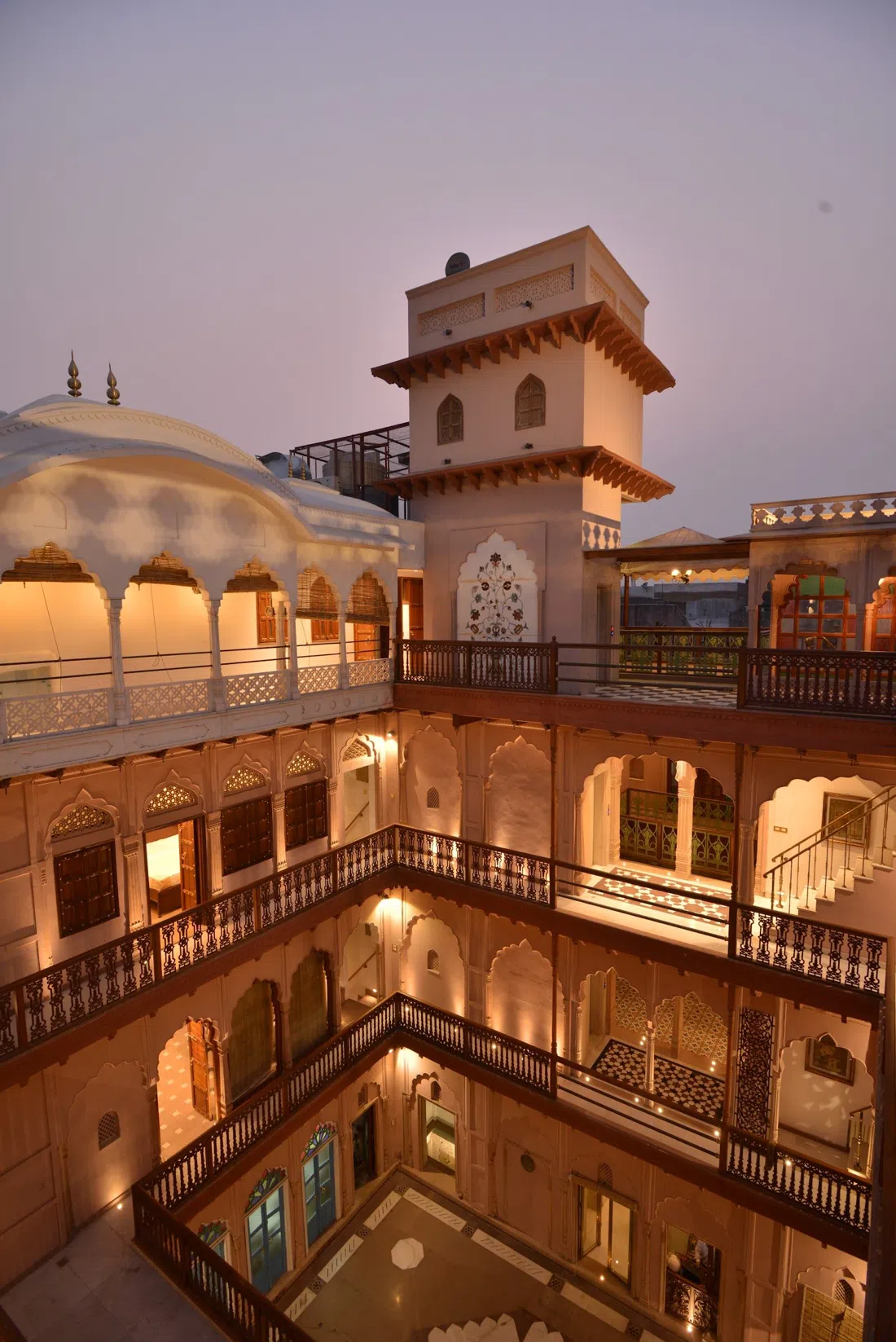
One venue lets you watch the wedding city from above instead of fighting through it. Haveli Dharampura (Old Delhi, near Jama Masjid) is the only proper heritage hotel inside the old city, a restored courtyard house with 14 rooms, indoor space for up to 150 and a rooftop that looks straight at the Jama Masjid domes. The rooftop restaurant and the evening kathak performance take non-resident bookings, so you can come for dinner without staying; reserve ahead, because the room is small and season evenings fill. Dinner runs about ₹2,500 to ₹4,000 a head and rooms are ₹12,000 to ₹30,000 a night. Book the rooftop for sunset, then listen: on a December evening you will hear three or four different bands from three or four different streets, all at once.
How to watch without gatecrashing
The baraat is public. The tent is not. Nobody minds you standing on the pavement while a procession dances past, and the dancers will usually wave you in for thirty seconds. That is genuine rather than a trap, and thirty seconds is the right length. What is not acceptable is walking into a marquee, photographing the bride without asking, or pointing a lens into a family's ceremony from the edge of a lawn.
If you are invited, and it happens more than you would expect, often through a shopkeeper or a hotel colleague, the conventions are simple. Cash in an envelope, an amount ending in one (₹1,100 or ₹2,100 is normal), given to the couple rather than the parents. Dress up rather than down; nobody cares whether your kurta is authentic, they care that you made an effort. Dinner will not be served before 10pm and often not before 11, so eat something in the afternoon. Expect the ceremony itself to run past midnight while most guests eat, talk and ignore it. That is not disrespect, it is how a long ritual and a long dinner coexist. For the rest of the city's basics, the Delhi guide covers ground this piece does not.
Getting around, paying and timing it
The metro does most of this. Chawri Bazaar station (Yellow Line) puts you a short walk from both Kinari Bazaar and Chawri Bazaar; Chandni Chowk station on the same line is closest for Bhagirath Palace and Dariba Kalan; Lal Qila or Jama Masjid on the Violet Line is best for Haveli Dharampura. Tis Hazari on the Red Line is the usual approach to Sadar Bazaar. Lajpat Nagar has its own interchange station. For Mehrauli's couture strip, ride to Qutab Minar on the Yellow Line and take a ten-minute auto; for the farmhouse belt, Chattarpur is on the same line. Janpath on the Violet Line serves The Imperial. The Leela Palace, Taj Palace and The Roseate are all better reached by taxi than by train. Trains run roughly 6am to 11pm, so a late night out in season means a cab home either way, and in the old city the last few hundred metres are always on foot. No car gets down these lanes.
Carry cash. Residents pay for everything by phone, but that system needs an Indian bank account, so ₹2,000 to ₹5,000 in small notes will cover a full day of markets, mehendi and lunch. Change is a real problem in wholesale lanes, so break your notes at a chain shop on the main road before you go in. ATMs cluster on Chandni Chowk itself and are scarce in the galis.
Markets open late and close on the Sabbath of their trade: nearly all of the old city shuts Sunday, Dariba Kalan largely takes Monday, Lajpat Nagar takes Monday. The workable market window is 11am to 1pm, before the season crush. The flower market is the exception and demands 5am. Evening belongs to the streets and the rooftop.
Seeing this season costs almost nothing. Reckon on ₹60 to ₹120 a day in metro fares, ₹150 a hand for mehendi, ₹20 for a marigold garland, and free entry everywhere else on this list. Add one splurge, dinner on the Haveli Dharampura roof at ₹2,500 to ₹4,000, or a drink in The Imperial's bar, and you have seen both ends of a ₹3 crore industry for the price of a decent meal.